

Good morning, Stoke Crew. Hope you all have some fun plans for this long weekend. Reply and let me know what you're up to! Alright, here's the news from the outdoor world this week. Stay STOKED — Tyler
In today's report
- 🎿 America's first-ever freeride team
- 📈 Outside Days is printing money for Colorado
- 🥾 Thru-hike record at 91 years young
- 🏆 Höll and Goldstone both defend World Titles
Skiing
🇺🇸 America's first freeride team
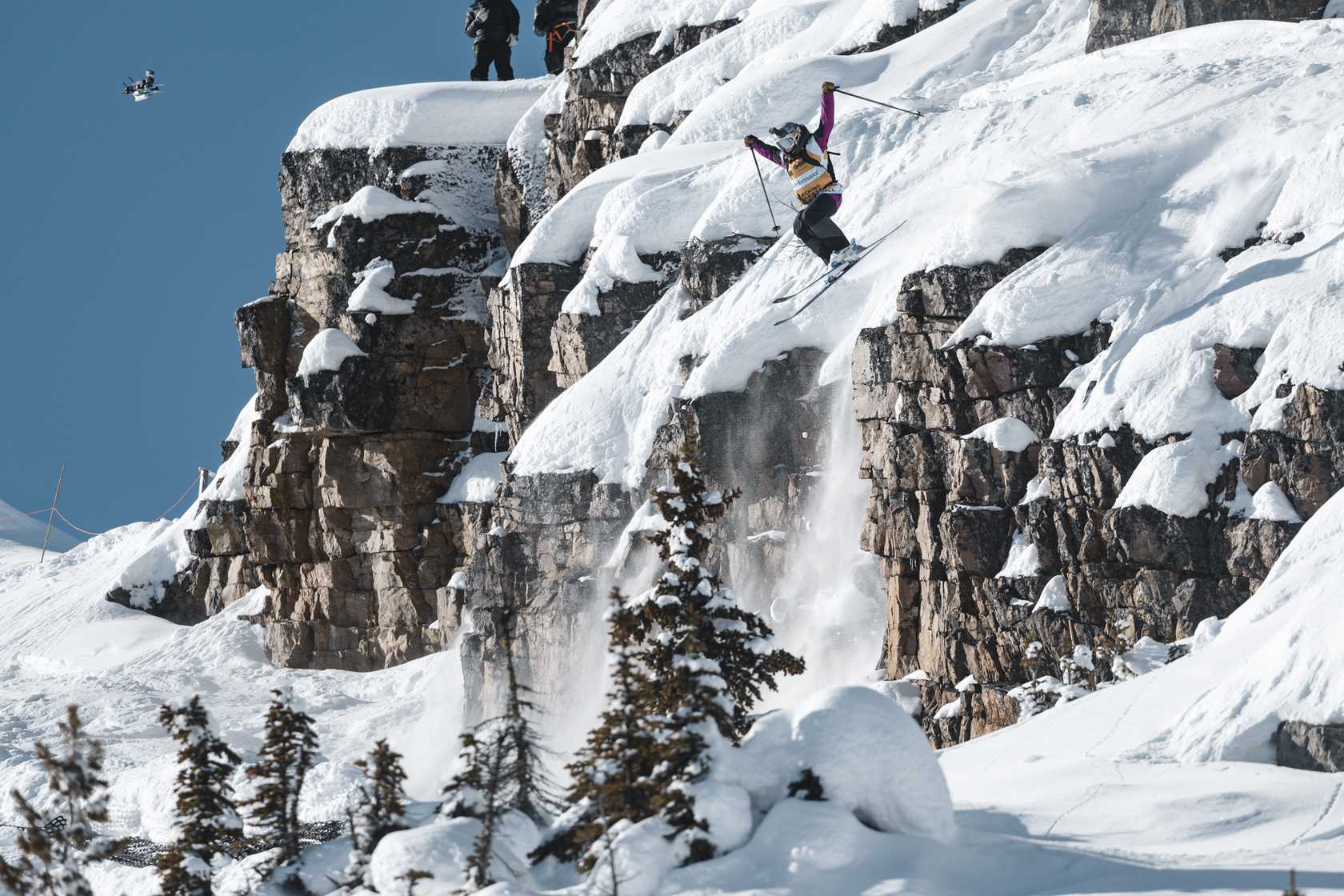
🎿 The U.S. finally has a national freeride team. The national governing body named 13 skiers and snowboarders last week to the inaugural U.S. Freeride Team, the first big-mountain roster it has ever fielded. The reason is simple. Freeride is now an Olympic sport, debuting at the 2030 Games in the French Alps, and America just started building its roster.
- The names hold some serious STOKE. Reigning FIS Freeride World Champion Mia Jones headlines the snowboard side. On skis, Jackson Hole's Kai Jones and California's Molly Armanino both own World Championship medals, and Joey Leonardo brings junior world gold.
- Colorado stacks the roster. Four of the 13 call the state home: Kelly Hilleke of Glenwood Springs, Joey Leonardo and Blake Moller of Edwards, and Shayne Blue Sandblom of Silt.
- Selection wasn't a popularity contest. Podiums from last season's Freeride World Tour counted, along with results from the 2026 World Championships in Andorra.
- A nomination isn't the team yet. The 13 athletes have to accept and sign on first, and the final roster drops in October.
Why It Matters: Olympic inclusion cuts both ways. The 2030 Games will pour money and eyeballs into big-mountain riding, and they'll also wrap selection criteria around a discipline that was invented specifically to escape formats. Whether freeride keeps its soul depends entirely on how it's judged and who does the judging.
🔥 The STOKE VOTE
Business
🏦 Festival money, conservation money

📈 Denver's outdoor festival is becoming a money printing machine. Outside Days was worth $42.15 million to Colorado this year. That's 17 percent better than 2025, and 163 percent above where the debut year landed. Three years in, the running total is knocking on $100 million.
- The crowd numbers explain the money. More than 40,000 people came through over four days at the end of May, and 30 percent traveled from out of state, a share that has grown by half since the debut. The state seeded the event with roughly $900,000 and now claims a hundred-to-one return.
- The origin story makes the numbers sweeter. After Outdoor Retailer ditched Denver for Salt Lake City in 2022, Colorado skipped the hunt for a new trade show and built a festival for the public instead.
- The 2026 edition ran Death Cab for Cutie, My Morning Jacket, and Cage the Elephant alongside athlete panels, a film festival, a startup pitch competition, and a career fair where 34 national brands met 700 attendees, most of them hunting for outdoor industry jobs.
Why It Matters: The big thing here is the $42 million pumped into Colorado's economy. Anytime we can have fun and put money into local businesses at the same time, that's a win. This event mixes the party with the professional, and that's huge for the young people showing up. People don't just want to buy outdoor products, they want to live outdoor lives surrounded by that culture. Outside Days does a good job at exactly that!
💰 Your gear taxes could start fighting wildfires. Proposition 137 was certified for the November ballot in late August, asking Colorado voters to point roughly $175 million a year tied to sporting goods sales taxes at wildfire mitigation, land and water conservation, and better outdoor access.
Quick insight: Colorado already taxes gear sales. A constitutional cap called TABOR limits how much tax money the state can keep each year, and everything above that cap goes back to taxpayers as refunds. Prop 137 grabs one slice of that overflow. In years when revenue exceeds the cap, an amount equal to the gear tax goes to conservation instead of refund checks.
- Nearly half goes to Great Outdoors Colorado, which would jump from one funding engine (the lottery) to two of roughly equal size. GOCO has turned $1.7 billion into more than 5,900 projects, including many land deals that I talk about in THE STOKE REPORT.
- Wildfire and watershed work gets the other half, flowing through four grant programs run by the state's natural resources and forestry agencies at more than $83 million a year. For scale, today's state budget for wildfire risk reduction sits around $16.4 million.
Why It Matters: The demand side is bottomless. Parks and wildlife officials have identified $900 million in needs over five years, and the state's outdoor equity grants have fielded over 1,000 applications while funding 165. Nobody in Colorado conservation is short on shovel-ready projects. They're short on cash.
Today's Stoke Story
🏅 Thru-hiking at 91 years young
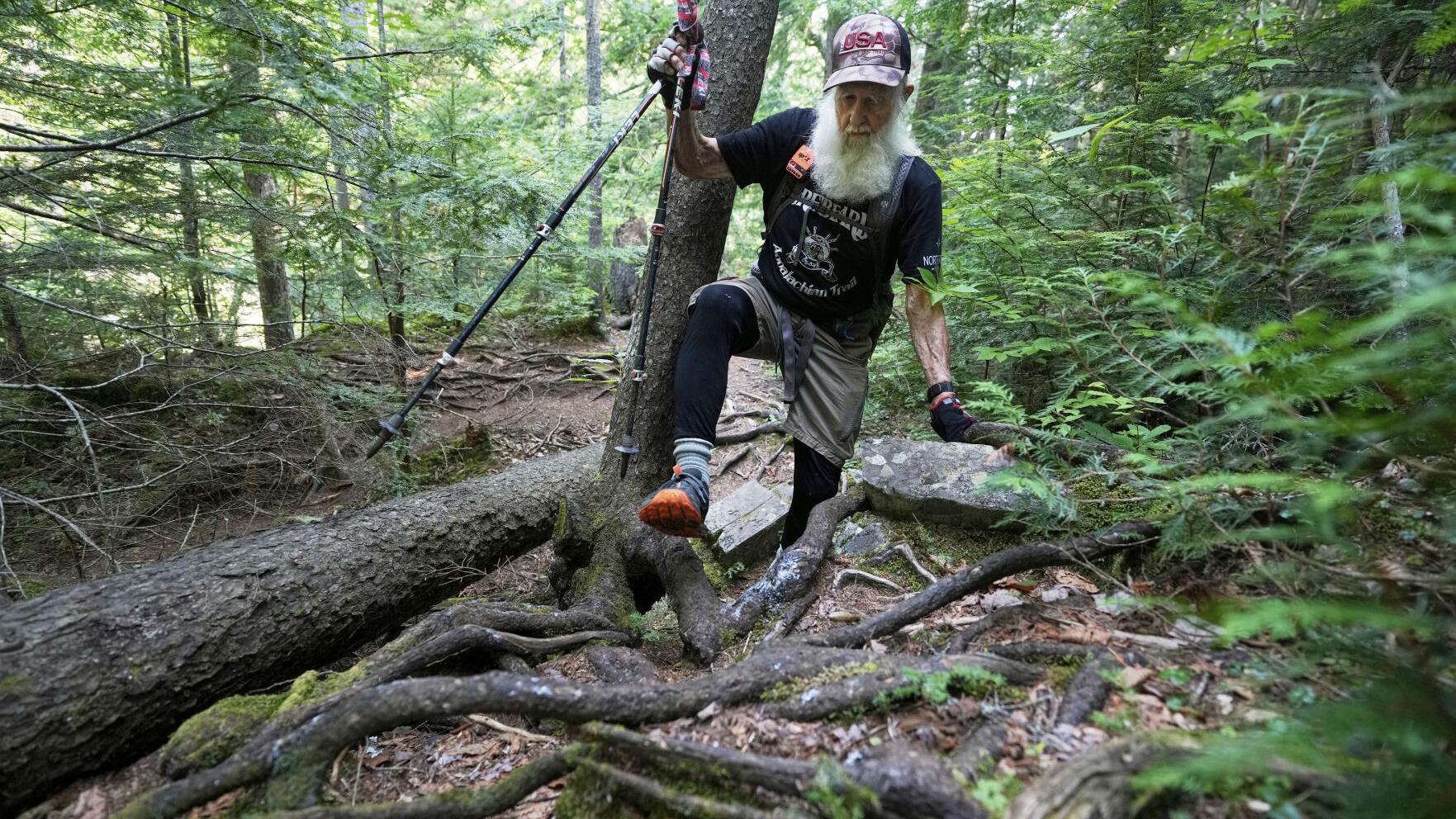
🥾 Dale "Grey Beard" Sanders is the oldest person to thru-hike the Appalachian Trail, again, at 91. He topped out on Mount Katahdin Monday morning to finish roughly 2,200 miles of trail with six days to spare on his deadline.
Quick primer on the deadline. A thru-hike doesn't have to be one continuous walk. The rule is every mile inside 12 months, in whatever order works. Sanders started at Harpers Ferry on September 6 of last year at age 90, walked the southern half first, wintered at home, and spent spring and summer working north toward Maine.
- The trail made him earn every mile. One fall dropped him 200 yards from the summit sign. An earlier one ended in a brief hospital stay, 142 miles from the finish. He counted 71 falls in all, six of them hard.
- He nearly quit in August. His wife's mother died, he went home to Tennessee to be with her, and it was his wife who sent him back out to finish.
- His resume was already pretty stacked. Sanders paddled the full length of the Mississippi at a record-setting age in 2015, then knocked out the Grand Canyon's Rim-to-Rim-to-Rim at 85.
Why It Matters: The takeaway isn't that everyone should thru-hike at 91. It's that the window for a full outdoor life is way wider than we think!
Biking
🌈 Höll and Goldstone repeat
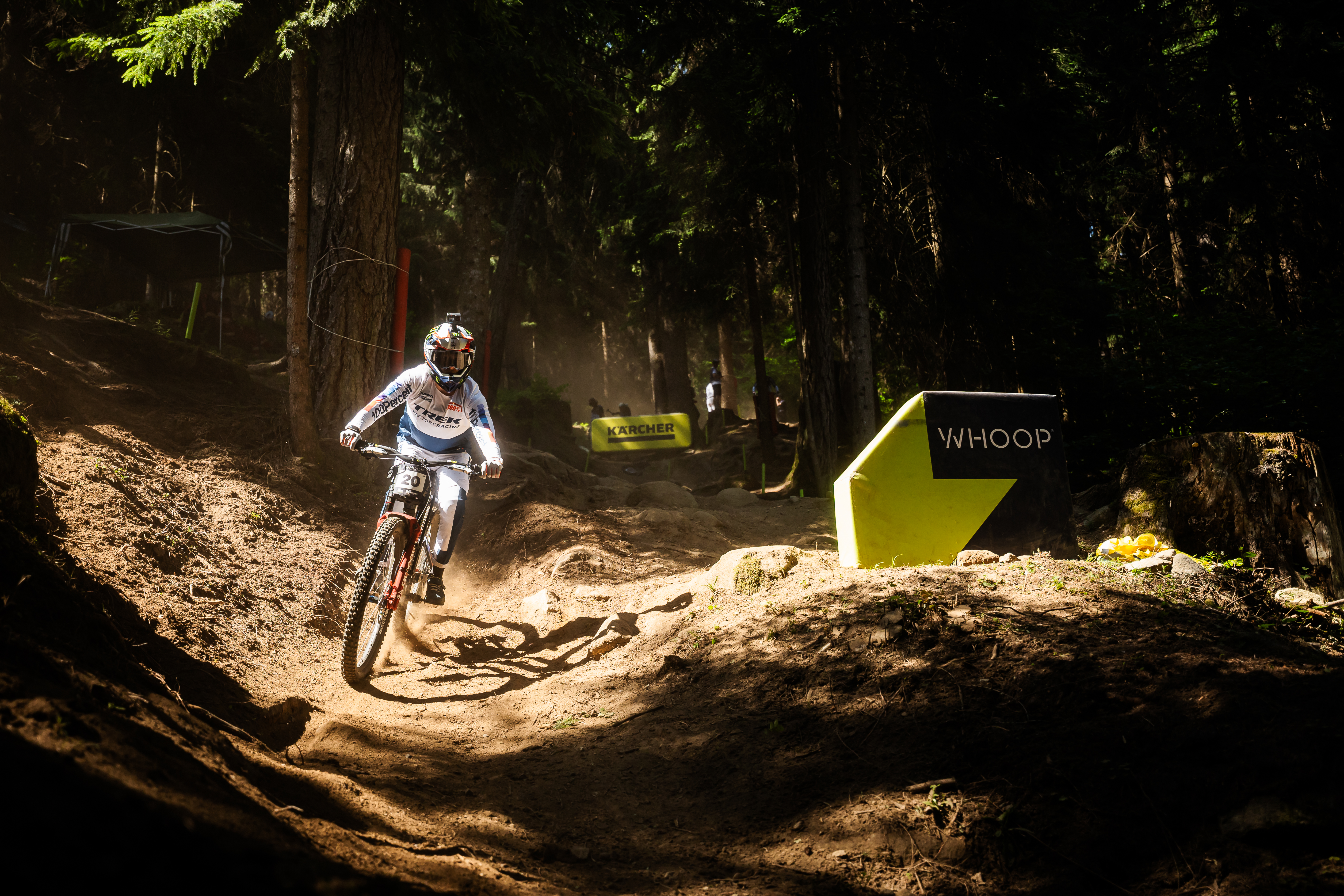
🏆 Downhill racing handed out its world titles Saturday at Val di Sole, Italy, and both stayed put. Vali Höll won her fifth straight women's world title, and Jackson Goldstone dropped in last with the podium stacked below him and defended the men's crown by 0.695 seconds.
The 30-second primer. The World Cup is the season-long points series, where they have multiple races over the season. Worlds is a single one-run race. Winning it earns the rainbow jersey, the striped kit world champions wear until the next edition. Val di Sole, in northern Italy, hosts the sport's roughest track. (Purgatory resort in Durango will actually host the 2030 World Championships!)
- Höll's race was decided early. She built her gap in the opening sectors, and Lisa Baumann's late charge still came up 1.728 seconds short. Hattie Harnden took bronze. Höll had already clinched the season-long World Cup, and every women's world title since 2022 belongs to her.
- Goldstone won his from behind, still 0.410 down at the third split before pouring everything into the bottom sectors. Watch the onboard of the winning run and try to exhale.
- The win made him the first North American with two elite downhill world titles. The 2021 junior Worlds podium on this hill was Goldstone, Jordan Williams, and Lachlan Stevens-McNab. Five years later, the same three filled the elite one.
Why It Matters: Two title defenses in a single day, against the deepest fields downhill has ever had. Höll is 24, Goldstone is five years out of juniors, and both record books are stacking up. Yeew!
🚲 UNREAL, a roughly 200,000-square-foot action-sports complex outside Calgary, is chasing the title of North America's largest indoor bike park. The $30 million build in Rocky View County is organized entirely around progression: jump lines that step up from small to pro-sized, airbag landings, pump tracks, and a slopestyle line shaped with input from Brett Rheeder, plus climbing, a gym, and restaurants under the same roof.
Doors are targeted for early 2027, aimed squarely at Canada's winter problem, where elite riders currently fly to New Zealand to train.
What else is going on
- North Maroon Peak climber Brandon Hinkle fell 500 feet on August 16 and lived, with fractures but no spinal damage.
- A drought-starved bear climbed through an unlocked Estes Park window before dawn and clawed a woman in her 80s.
- Grand Canyon flash flooding killed two people and wiped out Bright Angel Creek footbridges.
- Four million gallons of Pueblo sewage hit John Martin Reservoir Monday, swimming and fishing are out for Labor Day.
📚 Trailhead Trivia
REI started in 1938 when a Seattle couple got fed up paying too much for one specific piece of gear. What was it?
⚡ Share The Stoke
THE STOKE REPORT is a quick, no-fluff newsletter built for mountain lovers, adventure seekers, and those who enjoy a little Type 2 fun!
If you know someone like that, forward this email or send them to thestokereport.com. Thanks for spreading THE STOKE — it seriously means a lot!
If you ever have ideas, tips, or stories worth sharing, reply to this email. I'd love to hear from you.
Answer!
An ice axe. Lloyd and Mary Anderson imported an Austrian axe for $3.50 instead of the $20 local shops wanted, then built a co-op so friends could do the same.
See you soon,
Tyler
Founder / Editor — THE STOKE REPORT
