

Good morning, Stoke Crew. Colorado finally has some white stuff in the forecast and we'll take it! Hope everyone's week is off to a good start. The Olympics are in full swing, but between the time zone and life, catching live coverage has been a challenge. So today, we're bringing you an Olympic update to keep you in the loop. Hope you enjoy! And to my ex-girlfriend that I cheated on, I'm sorry... jk jk (hope most of you get that joke) if not click here for a funny Olympic story.
In today's report
- How are Colorado athletes doing in the Olympics?
- This winter's drought impact
- Have you heard of the EXPLORE Act?

Local Stokelight
🏅 Colorado Olympian Updates
⛷️ 20 year-old Liz Lemley stood at the top of the moguls course in Livigno, Italy, whispered "let's go" to herself like she always does, and then dropped in to claim Olympic gold for the United States. The Vail native scored 82.30 with a pair of cork 7s in Wednesday's super final, beating out her teammate Jaelin Kauf (80.77, silver) and France's Perrine Laffont (78.00, bronze) in a dominant performance. Lemley becomes only the third American woman to win Olympic moguls gold, joining Donna Weinbrecht (1992) and Hannah Kearney (2010). The victory came after a rocky road where she missed the entire 2024-25 season with an injury right before the World Cup opener.
🏂🏻 Steamboat's Maddy Schaffrick looked at the scoreboard after her second run Wednesday and knew what it meant. The 31-year-old halfpipe rider finished 15th in Olympic qualifying, missing the top 12 cutoff for the finals. It closes out an Olympic appearance that seemed impossible just a few years ago when she was apprenticing as a plumber and coaching elementary school kids for ski pass money.
Schaffrick had walked away from snowboarding at 20 after burnout and knee injuries derailed her dreams of making the 2010 and 2014 Olympics. She didn't compete in a World Cup event from March 2015 until December 2024 but a second place finish in Aspen in January secured her Olympic spot, and while she didn't advance past qualifying, three of her U.S. teammates did: Chloe Kim (90.25 points), Maddie Mastro (86.00), and Bea Kim (76.75).
🏂🏻 Chase Blackwell, the 26-year-old Longmont native has spent eight years on the U.S. Olympic Snowboard Team working toward this moment, racking up 11 World Cup top-tens including a podium at Mammoth in 2023. He's betting his 1260 and switchback 1080 will be enough to crack the top 12 and advance to Friday's halfpipe final in a field that includes Australia's Scotty James (five-time Olympian who won the last five X Games halfpipe titles) and defending champion Ayumu Hirano of Japan. Blackwell told media he's trying to manage nerves but enjoying the Olympic village experience.
⛷️ Dylan Walczyk is back in an Olympic final, and this time with more experience and a better shot at hardware. The 32-year-old Breckenridge resident finished seventh in Tuesday's qualifying round with 76.67 points, automatically advancing to Thursday's men's moguls final in Livigno. It's an improvement from Beijing 2022 where Walczyk scraped into the final in 10th place (the last qualifying spot) before finishing 16th overall. Walczyk gets two chances at medals in Milan Cortina: the individual moguls final Thursday and the dual moguls final Sunday, which is making its Olympic debut.
Environment
💧 How This Year's Weak Snowfall Is Making an Impact
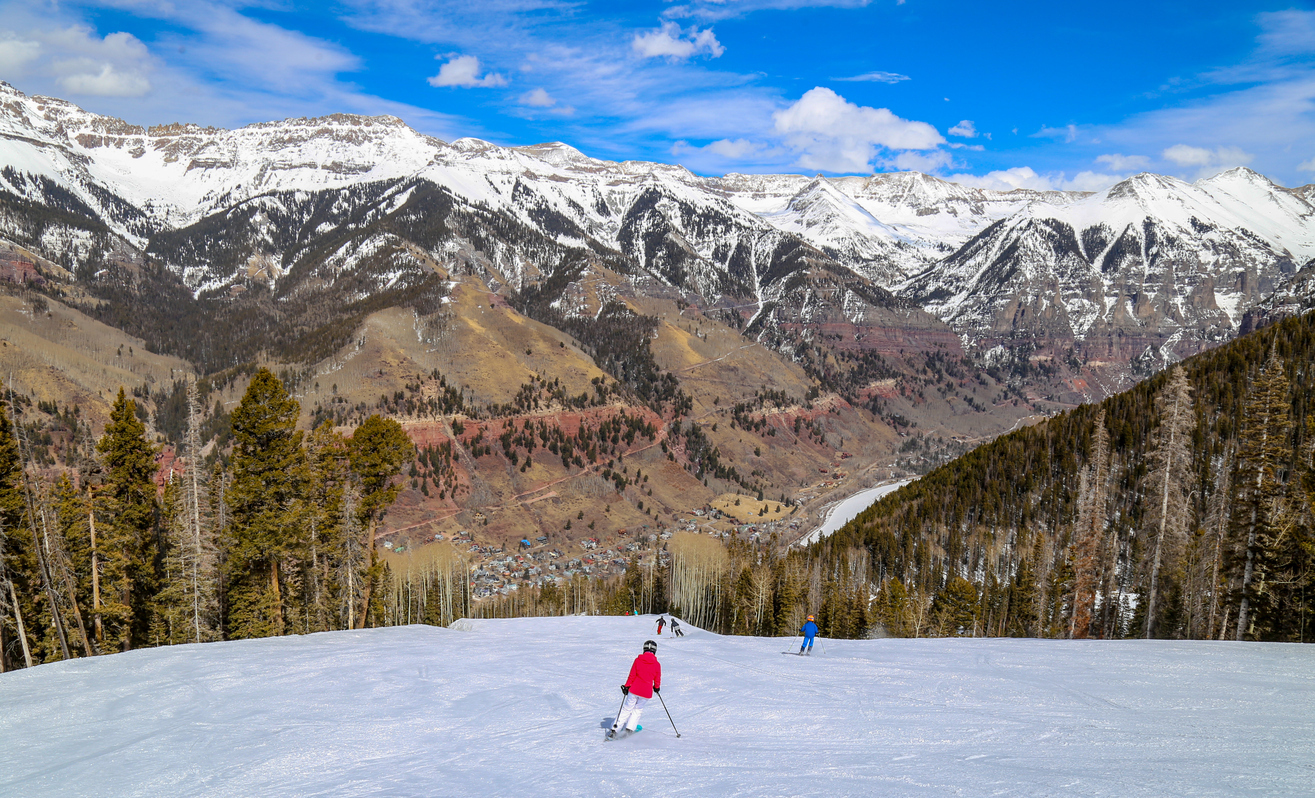
The American West is experiencing its worst snow drought in over 40 years. with snow cover shrinking to roughly California-sized at 155,000 square miles when it should be closer to 460,000 square miles (the combined size of California, Utah, Idaho, and Montana). Oregon, Colorado, and Utah have all reported their lowest statewide snowpack since the early 1980s when records began. Scientists say more than 8,500 daily high temperature records have been broken or tied in the West since December 1, with at least 67 weather stations measuring their warmest December through early February on record. The snowpack in Oregon is not only record low but 30% worse than the previous record.
A dry January meant most Western states received half their average precipitation or less, and because of warm temperatures, much of what did fall came as rain instead of snow that would normally stick around in the mountains. The lack of snow threatens summer water supplies for agriculture and cities while setting up conditions for an early wildfire season.
Why It Matters:
This isn't just bad for skiers. Mountain snowpack acts as a natural water storage system, slowly melting through spring and summer to provide steady flows for rivers like the Colorado that supply water to farms and cities across the West. When snow either doesn't accumulate or melts too quickly, those rivers run lower later in the year exactly when demand peaks. The warmth is the real story here, with scientists pointing to climate change from burning fossil fuels as the driver.
Much of the precipitation that would normally fall as snow and stick around for months is instead falling as rain and running off immediately. The early loss of snow cover also exposes soil and vegetation to spring and summer heat earlier than normal, drying everything out faster and creating conditions for wildfires to start sooner.
One year after the EXPLORE Act became law, outdoor recreation advocates gathered at a House committee hearing to celebrate progress while pushing for faster implementation of provisions in the first-ever outdoor recreation legislation. The Expanding Public Lands Outdoor Recreation Experiences Act passed both chambers unanimously in 2024 and was signed in January 2025, addressing a $1.2 trillion industry that rivals oil and gas in economic impact while supporting over 5 million jobs. The 84-page bill modernizes everything from wifi access in parks to digital recreation passes, streamlines permitting for outfitters and guides, reduces small business fees, and directs funding to gateway communities for housing and infrastructure needs.
Jessica Turner, president of the Outdoor Recreation Roundtable who worked to pass the legislation, testified at the anniversary hearing that while "we did something awesome a year ago," much work remains. She called technology and data sharing the biggest hurdle, noting that better visitor and wildlife data would "unlock everything" for land managers trying to improve experiences and reduce overcrowding.
Why It Matters:
The EXPLORE Act represents congressional recognition that outdoor recreation deserves legislative support just like oil, gas, farming, and mining despite generating comparable or greater economic value. Its unanimous passage demonstrates outdoor access remains bipartisan even in divided times. Turner's comment that she forgot provisions while re-reading the bill shows how comprehensive yet under-appreciated this legislation is.
The technology implementation challenge is crucial because better data enables smarter management decisions that improve visitor experiences while supporting gateway economies. However, Turner noted recreation has "never been prioritized by any president," making the outdoor industry "underdogs" dependent on sustained congressional pressure to ensure agencies actually implement what Congress mandated. The bill might take years to fully trickle down to all affected land managers, outfitters, guides, and communities.
📚 Trailhead Trivia
How many people have won gold in both the Winter and Summer Olympics?
⚡ Share The Stoke
This newsletter is for mountain lovers, first chair advocates, and the ones who live for type 2 fun. Basically, the type of people whose "five-year plan" is just a list of peaks and routes!
If you know someone like that, forward this email or send them to thestokereport.com. Thanks for spreading the stoke — it seriously means a lot!
Answer!
Only 1 (American Eddie Eagan grabbed a gold medal in boxing during the 1920 Summer Olympics in Antwerp, Germany. Then, more than 10 years later, he scored another in the 1932 Winter Olympics, as part of a four-man bobsled team.)
See you soon,
Tyler
Creator — The Stoke Report
