

Good morning, Stoke Crew. Fall is hands down my favorite time in Colorado. The only catch? It has the shelf life of an avocado. One day it's perfect, the next it's gone. Go get after it!
I really enjoyed researching and writing this one, a lot of cool stuff going on in the industry! Hope you like it too, Stay STOKED - Tyler
In today's report
- ⚖️ Telluride owner's lawsuit tossed
- ⛷️ Winter Park weekends start at 8am
- I-70 < ski train
- 💼 Vail & Wall Street
- 🚠 Doppelmayr's billion dollar year
- 📈 Colorado tops 10 million skier visits
Skiing
❄️ Winter's already in motion
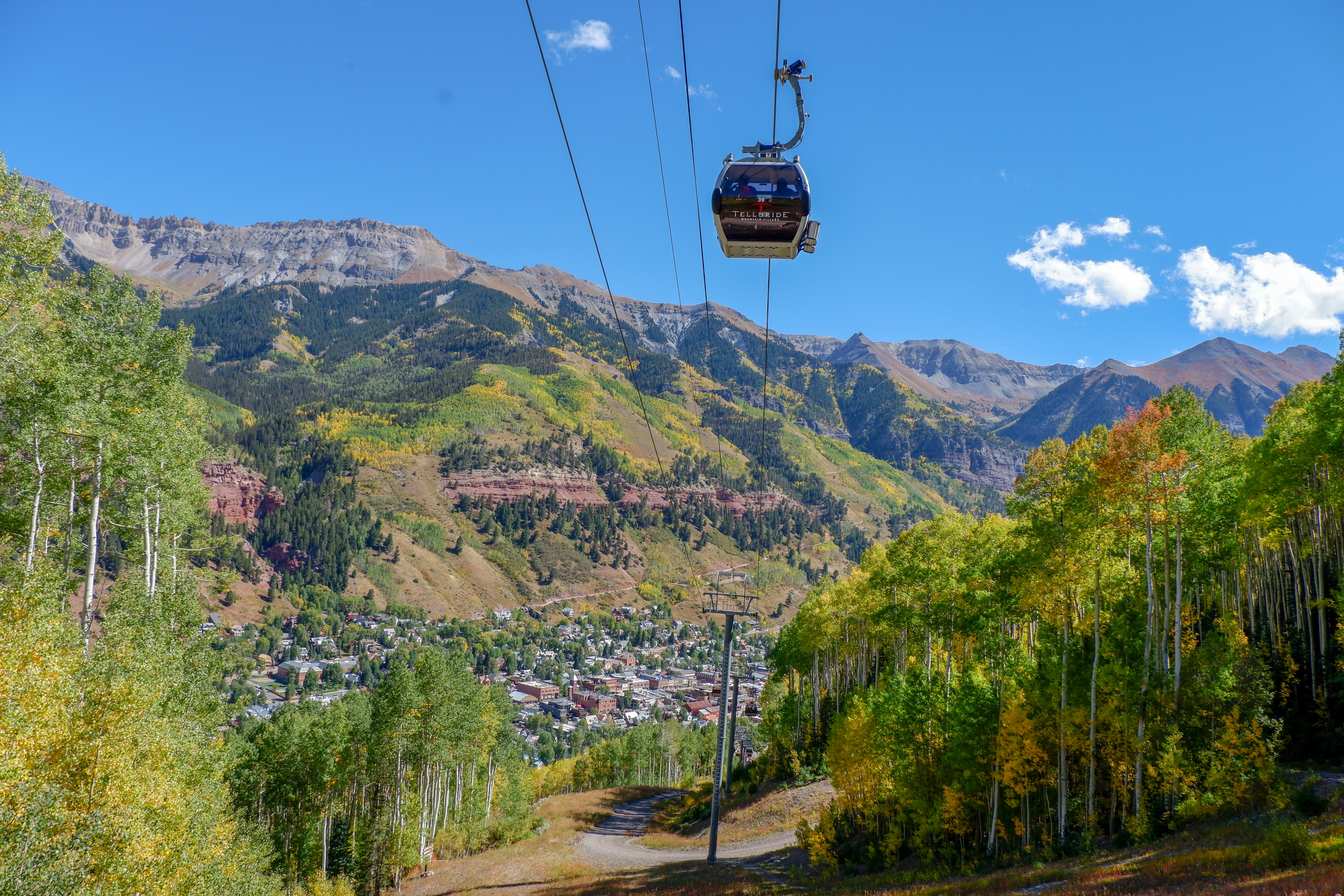
⚖️ The Telluride sale saga finally has a courtroom ending. A San Miguel County district judge threw out Chuck Horning's lawsuit against the three former local officials who tried to buy his ski area last winter, ruling that the suit "fails to state a plausible claim." The case was dismissed with prejudice, the kind that stays dead for good.
Quick rewind, because this one has layers. Telluride's patrollers walked off the job after Christmas when pay talks fell apart, and Horning answered by shutting the mountain from December 27 to January 7. Mid-chaos, Mountain Village Mayor Marti Prohaska, Telluride Mayor Pro Tem Meehan Fee, and town manager Paul Wisor pitched Horning on selling control to local investors. He never signed. Instead he took the offer public, all three officials resigned in the uproar, and this summer he sued them, claiming they had dangled an end to the strike as pressure to sell.
- The judge leaned on two points. The officials had no authority to end the strike, and as the ruling put it, "mere inaction alone cannot constitute a wrongful act."
- The rejected offer would have paid Horning $127.5 million for a 51% stake, with the investors behind it never named.
- The strike's bill was steep. Winter sales dropped 11% in Telluride and 19.5% in Mountain Village.
- One twist from the town investigations that cleared the trio: the sale idea started with Chad Horning, Chuck's son and longtime GM, who helped shape the first offer before splitting with his dad.
- The strike itself ended January 8 after 13 days. Patrol took a deal worth close to a 20% raise over the life of the contract and got its six supervisors into the union, but the compressed wage scale they walked out over went unfixed. Neither side released the terms.
Why It Matters: Ask whether patrol won and the honest answer is partly. Thirteen days on the picket line bought close to a 20% raise and union protection for supervisors, real money in a job where rookies started around $21 an hour. What they didn't get is the thing they struck for, a wage ladder that pays a fifteen-year veteran meaningfully more than a first-year hire. That's why their own statement led with disappointment.
They won the paycheck and lost the structure, which means this fight returns when the contract does. Chuck Horning, the Southern California real estate investor who has held Telski for two decades, still owns the mountain, and he has said plainly it isn't for sale.
🏔️ Crested Butte has a new way to trigger slides. The resort installed five remote-control exploder towers this month, three of them above Banana Couloir, in one of the biggest avalanche-safety investments it has ever made. The Boom Whoosh system, built by Wyoming's Alpine Infrastructure, ditches the propane and helicopter-serviced explosives of the usual European designs for a hydrogen-oxygen blast that leaves nothing behind except water.
Hydrogen keeps moving in the cold and pushes uphill, so the tanks live down at the road. It's the first American-made system of its kind, with Jackson Hole running the prototype since 2024, Park City's towers going live this winter, and Mammoth next in line.
Why It Matters: Patrollers still ski into loaded terrain with bombs in hand. Every start zone a tower can shoot remotely is one less gamble, and faster control work means the steeps open sooner after a storm.
⛷️ Winter Park weekends now opens at 8am. Every Saturday and Sunday this season, lifts open at 8 a.m. instead of 9, and the hour is free for anyone holding a ticket or pass. Across the winter that's roughly 36 bonus hours, about four and a half extra ski days. Opening day is still unannounced beyond "as soon as possible."
🚞 Somebody wants to build a ski train from the airport. Denver West Express, a private Colorado group, is floating a 178-mile battery-electric rail line that would run DIA to Avon in about 97 minutes, averaging 90 mph with stops at Littleton's Mineral Station, Bailey, and Frisco. From the last stop you're a short shuttle from Breck, Keystone, Copper, Vail, and Beaver Creek.
Before anyone celebrates the death of the I-70 crawl, the fine print: this is a concept, not a project. Nothing has been filed with CDOT, no money is lined up, and the $28 to $33 billion price tag with a 12-to-14-year build seems like a longshot dream idea. (but would be cool)
Business
💼 The money moving the mountains
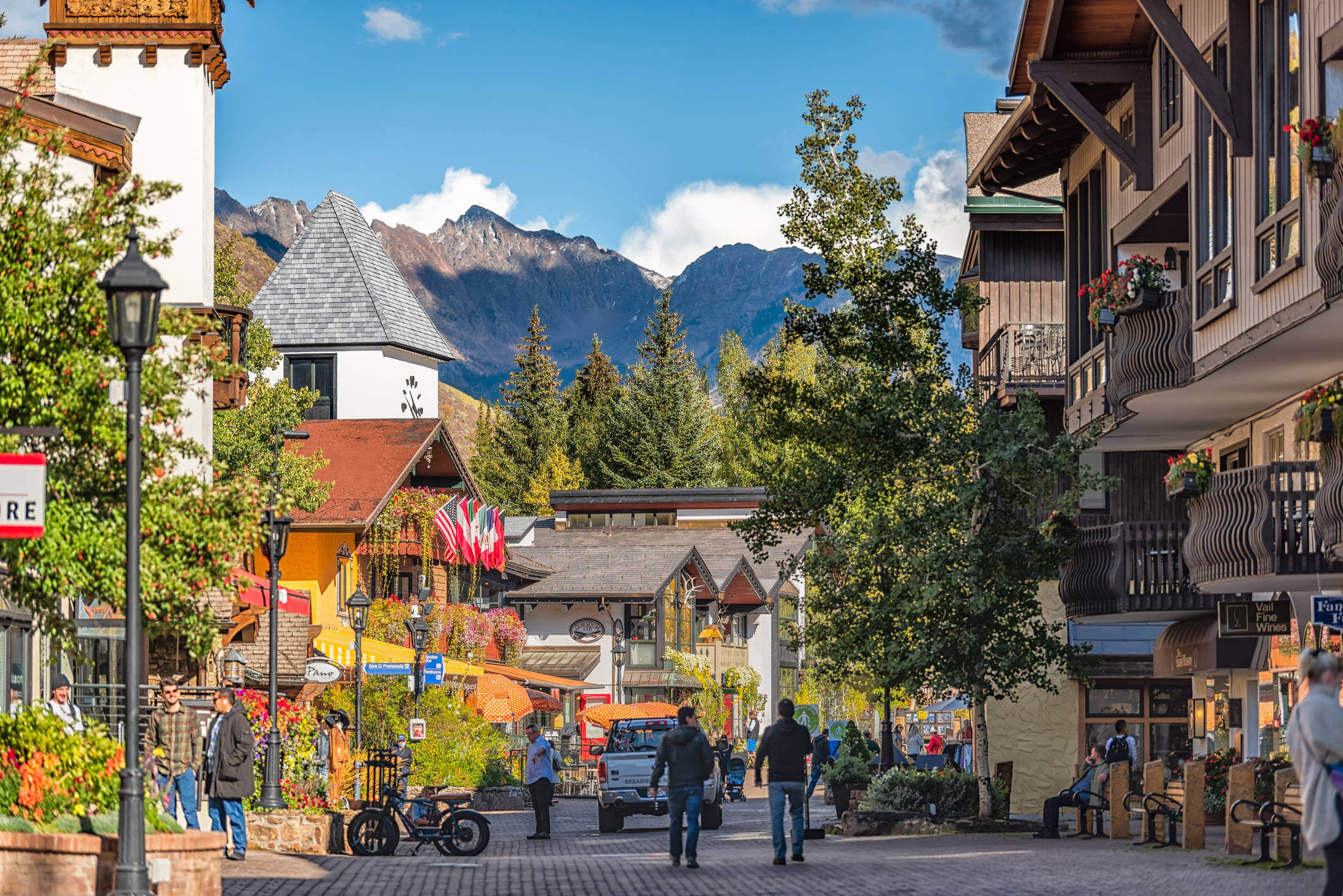
💰 Wall Street wants a say in how Vail runs its mountains. Oasis Management, a hedge fund based in Hong Kong, disclosed this week that it bought 6.2% of Vail Resorts, roughly $314 million worth of stock, and it wants shareholders to hand four board seats to its picks, headlined by former Disney CEO Bob Chapek and Olympic gold medalist Picabo Street.
Oasis believes the company's 42 resorts are worth more than the stock price reflects, and its fix list reads like it was written in a liftline: better guest experience, smarter pricing, better food, stronger ties with mountain towns. If those changes lift the share price, that $314 million stake grows right along with it.
So how does 6.2% turn into board seats? It doesn't, not by itself. A stake that size gives Oasis the standing to nominate candidates, but seats get filled by a vote of all shareholders at the annual meeting, usually in early December, and nine seats are on the ballot this year. That means Oasis has to convince the investors holding the other 94% to elect its four names over the company's picks.
Almost nobody attends that meeting in person. Shareholders vote ahead of time, mostly online, and the months-long campaign for those votes is what's called a proxy fight. Oasis is paying for its side of it.
Why It Matters: The board is the boss of the bosses. It hires and fires the CEO and signs off on every big call, so this vote decides who steers 42 resorts and everyone who works at them.
🚠 The company that builds your chairlifts is having a moment. Doppelmayr, the Austrian giant behind more lifts than anyone on earth, grew revenue 9.1% last fiscal year and landed at 1.3 billion euros.
Worth knowing: that revenue isn't all ski lifts. Doppelmayr also builds urban gondolas, freight ropeways, and automated warehouse systems, and the company keeps profit numbers private, so the top line is the only scoreboard we get.
- The flagship American project was Big Sky's Explorer Gondola, which opened December 20 and swapped out the final lift left from the resort's earliest days. Its 83 cabins carry 2,850 skiers an hour, more than double the old chair!
- Deer Valley's East Village Gondola, the front door to the resort's massive expansion terrain, made the year's highlight list too.
Why It Matters: Lift orders are the ski industry's best confidence signal. Resorts commit to these eight-figure contracts years in advance, so when the world's biggest lift builder posts a 9% revenue jump, it means mountains kept signing checks through one of the worst snow years on record.
📈 Where do America's skiers actually live? The industry's annual survey answered it for 2025-26, ranking states by the share of skier visits their residents produce, and the top ten together generate over 55% of all the skiing in the country.
The podium won't shock anyone. California produces 10.9% of US skier visits, Colorado 9.3%, and New York 7.8%, nearly 30% between the three. It's the rest of the list that's interesting.
- Texas is tenth at 3.2%, and there isn't a single ski area in the state. That share beats 40 other states, and it explains every Dallas accent you hear at Breck. New Jersey (3.3%) and Michigan (3.4%) sit just above it.
- Massachusetts is the sneaky one at number four (5.4%), producing more skiing than every western state except California and Colorado.
- Utah lands at just 4.3% despite hosting some of the best terrain on earth. Small population, monster destination market. The Wasatch runs on other states' skiers.
- Colorado hosted 10.5 million visits last season, the most in the nation!
Why It Matters: Colorado shows up on both sides of the story: second-biggest producer of skiers and the biggest host of them. The I-70 crawl isn't just tourists. It's all of us locals chasing pow too. Honestly, I-70 is my least favorite part of a pow day.
🔥 The STOKE VOTE
One seat on a resort board. First move?
What else is going on
- Arapahoe Basin marks 80 years this season: $80 Wednesday lift tickets and an 80-prize giveaway topped by a heli-skiing trip.
- Colorado's bear attacks reached a record 10 after a camper near South Fork and a Durango teen were injured.
- Helmet use hit a record 94% of US skier visits last season, up from 25% in 2002-03.
- REI and AllTrails struck a deal that cuts AllTrails Plus to $25 a year for the co-op's 26 million members.
- A mountain lion napping in a Westminster tree closed the street below until CPW tranquilized it for relocation.
📚 Trailhead Trivia
Doppelmayr built the world's first high-speed detachable quad in 1981. Which resort got it, and what was the lift called?
⚡ Share The Stoke
THE STOKE REPORT is a quick, no-fluff newsletter built for mountain lovers, adventure seekers, and those who enjoy a little Type 2 fun!
If you know someone like that, forward this email or send them to thestokereport.com. Thanks for spreading THE STOKE — it seriously means a lot!
If you ever have ideas, tips, or stories worth sharing, reply to this email. I'd love to hear from you.
Answer!
Breckenridge, and it was the Quicksilver SuperChair off the Peak 9 base. Poma replaced it in 1999 with the Quicksilver Super6, and the original quad got shipped to Owl's Head in Quebec, where it ran until 2019. Thirty-eight seasons in two countries.
See you soon,
Tyler
Founder / Editor — THE STOKE REPORT
