

Good morning, Stoke Crew. Summer showed up about two months early and honestly, I'm not mad about it. Trees are already blooming down here in Golden, but in classic Colorado fashion, we're supposed to get snow on Wednesday....because why not. This weekend's looking nice though, and I'm thinking about heading to Shelf Road for some climbing. Hit me up if you want to link. Here's the report :)
In today's report
- ⛷️ The U.S. women's alpine team won the Nations Cup
- 📉 Outdoor brands make changes
- 💧 Lake Tahoe received 16 billion gallons of water in a late-season storm surge
- 🐟 6.2 million juvenile salmon were released
- 🦅 California condors are nesting in Northern California for the first time in over a century
MOUNTAIN BRIEFING
🇺🇸 Team USA's best season since '82

⛷️ The U.S. women's alpine ski team has won the FIS Alpine Nations Cup for the first time since 1982, ending a 44-year drought in a season defined by depth across all disciplines. The team tallied 11 World Cup victories and 27 podium finishes, with 16 different athletes contributing points throughout the season.
- The U.S. women captured the overall Nations Cup as well as the slalom and giant slalom discipline cups. Shiffrin's record-setting nine-slalom season and sixth overall title anchored the effort, but contributions from Breezy Johnson and Lindsey Vonn (a combined 10 speed podiums), plus emerging talents across giant slalom and super-G, provided the team-wide depth needed.
- The Nations Cup is awarded to the country with the most cumulative World Cup points across all athletes and disciplines in a season. Unlike individual titles, it requires multiple athletes performing consistently across speed and technical events.
Why It Matters: Shiffrin, Vonn, and Johnson get the headlines, but the Nations Cup doesn't care about star power. It rewards the team that shows up across every discipline, every weekend, all season long. That's what makes a 44-year drought ending feel different from another individual title!
Environment
🏔️ Tahoe surges, salmon struggle, condors nest
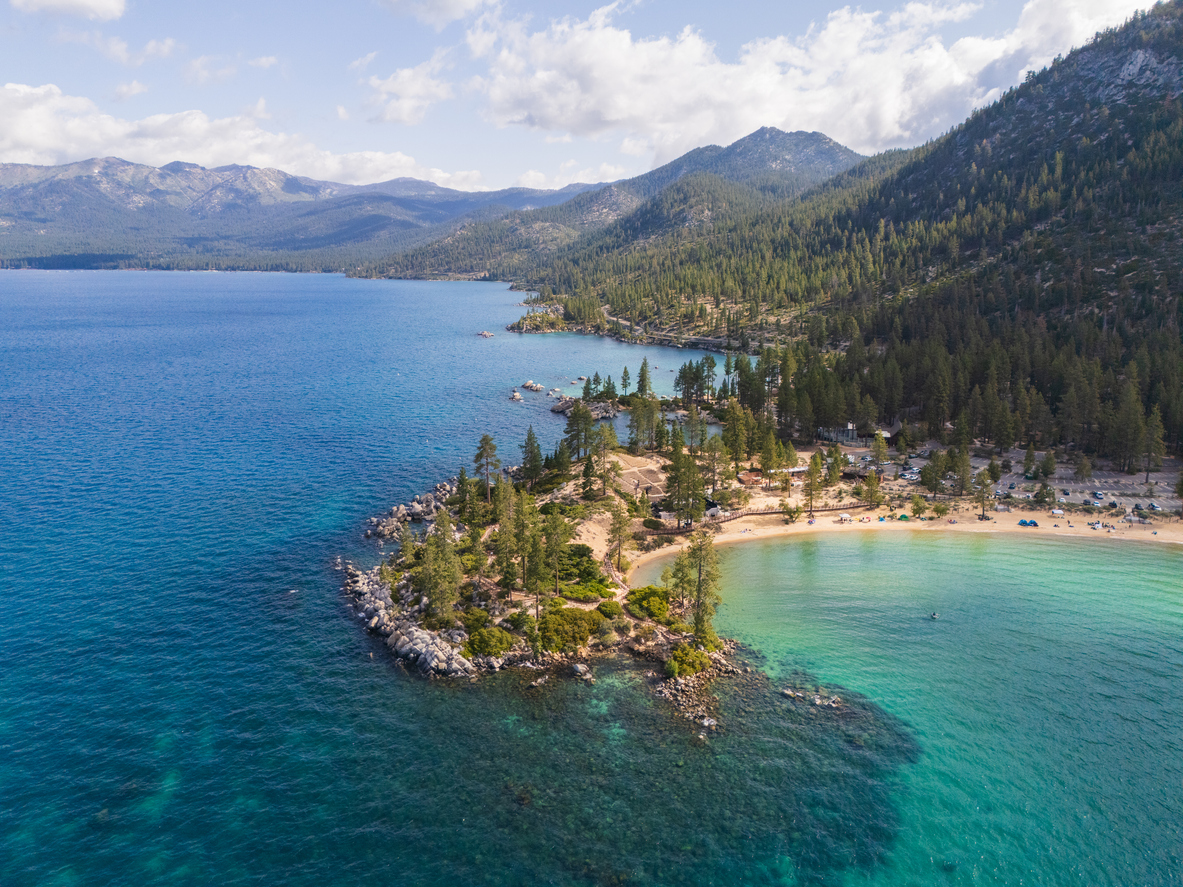
💧 A stretch of winter storms has delivered roughly 16 billion gallons of water to Lake Tahoe since mid-February. USGS data shows the lake's water level climbed from about 7.5 feet to 8 feet on the measuring station during that span, a meaningful jump for a body of water as enormous as Tahoe.
- The gains were driven by atmospheric rivers and heavy storms across the Sierra Nevada, bringing direct rainfall and snowmelt into the basin. Early February was notably dry, raising water supply concerns before the late-season surge reversed the outlook.
- Drought conditions across California and Nevada have improved significantly this water year, with some areas recording more than 300% of normal precipitation since October 1. Tahoe is now well above its typical winter level.
- Experts caution that one strong wet season doesn't erase long-term drought damage. Prolonged dry periods cause land subsidence that permanently reduces the ground's ability to store water.
Why It Matters: One good storm stretch can change the outlook for a season. It can't change the outlook for a decade. The West has a habit of treating wet years as proof that drought is over, when the reality is that the ground itself has lost the ability to hold as much water as it used to. Tahoe's surge is great news for this summer, not necessarily for the long term.
🐟 More than 6.2 million juvenile fall-run Chinook salmon were released from the Coleman National Fish Hatchery into Battle Creek this week, beginning their migration down the Sacramento River toward the Pacific. But the conditions are alarming: an early spring heat wave and well-below-average river flows have conservationists concerned about survival.
- Flows at Wilkins Slough stood at roughly 7,780 cubic feet per second, about 38% below the 10,700 cfs threshold that research has linked to significantly higher juvenile survival. A 2021 study found survival jumped from around 19% to 51% once flows exceeded that mark.
- The Golden State Salmon Association is pushing the Bureau of Reclamation to release more water from Shasta Dam to give the fish a pulse of flow. Water managers are holding back supply to prepare for the dry months ahead, even as snowpack tracks toward near-record lows.
- The tension illustrates the growing conflict across Northern California's water system: reservoirs are strong, but the snowpack that would normally replenish them through summer is critically low, forcing difficult tradeoffs between agriculture, municipal supply, and ecosystem needs.
Why It Matters: Six million fish just entered a river running 38% below the flow level they need to survive. The Bureau of Reclamation is holding water back for summer. The salmon association is begging for a pulse. This is the West's water crisis in miniature: not enough for everyone, and the ecosystem is usually the one that loses.
🦅 Two California condors reintroduced by the Yurok Tribe appear to be nesting inside an old-growth redwood along Redwood Creek drainage in Northern California. If confirmed, it would be the first condor nest in the Pacific Northwest in over 100 years. The female, Ney-gem' Ne-chween-kah ("She carries our prayers"), is believed to have laid an egg in early February. Her partner, Hlow Hoo-let ("At last I fly"), shares incubation duties.
- Both birds are nearly seven years old (right at breeding age) and were among the first condors released in the region in 2022 by the Northern California Condor Restoration Program, a partnership between the Yurok Tribe and Redwood National and State Parks.
- The nest's location is so remote that direct confirmation of the egg is impossible. Biologists are relying on GPS transmitter data and behavioral observations showing the classic alternating incubation pattern. The male's transmitter actually triggered a mortality alert because he was sitting so still.
- The total California condor population now stands at 607, up from just 22 in 1982. Twenty-four condors currently fly within Yurok ancestral territory. The program plans to release at least one cohort per summer for 20 years.
Why It Matters: Conservation stories rarely have clean endings, and this one hasn't ended yet. First-time condor parents usually fail, and lead poisoning killed a bird from this flock just last year. But the fact that reintroduced condors are choosing to breed in their ancestral range, in an old-growth redwood, four years after release, is a signal that the habitat and the program are working.
Business
💲 New changes for outdoor brands
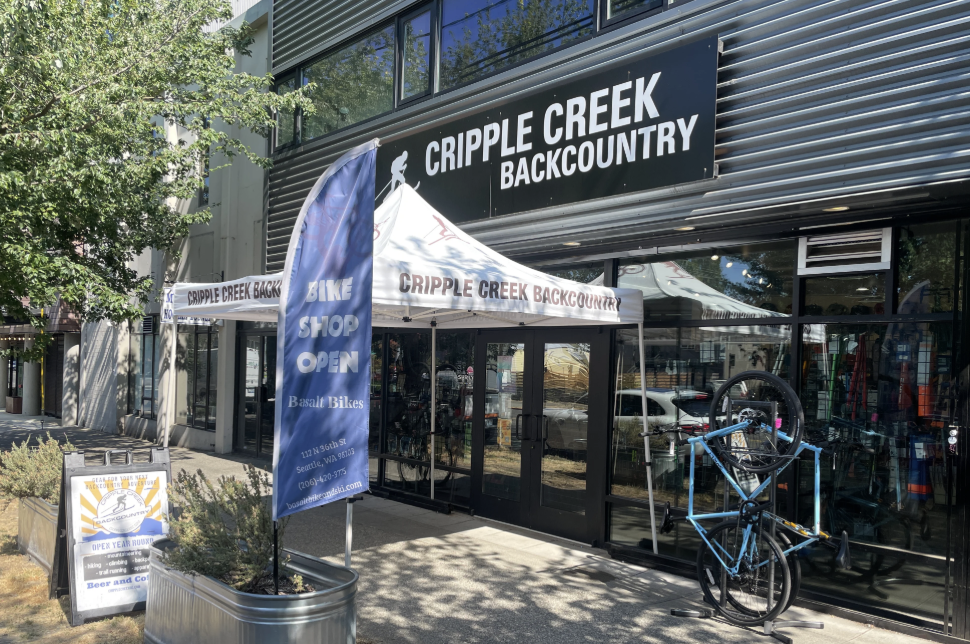
🏔️ Cripple Creek Bike & Backcountry will take over the Wilderness Exchange space at Platte and 15th, moving from Englewood into the 3,700-square-foot retail area. Founded in Carbondale in 2012 as a backcountry ski specialist, Cripple Creek now has locations across Colorado and Seattle. They'll offer backcountry ski and bike gear plus hand-tuned service.
Why It Matters: The corner stays in the independent outdoor retail game. Different shop, same commitment to specialty gear in a space that's been home to outdoor culture for 26 years.
🚴 Scott Sports named Hsuan Boon Tan as co-CEO alongside 35-year veteran Pascal Ducrot, replacing Juwon Kim, who returns to parent company Youngone in South Korea. It's the third co-CEO change since March 2024. Tan, a two-year Scott board member and former Youngone legal chief, takes over as the company says it's moving from stabilization to growth.
Why It Matters: Three leadership changes in two years at a premium outdoor brand still navigating the post-pandemic bike industry correction. Continuity from Ducrot helps, but the churn at the top tells its own story.
What else is going on
- Colorado wolf activity consolidates into northwest and southwest pockets as denning season begins. March tracking shows collared wolves clustered in watersheds touching Rio Blanco, Routt, Jackson, Grand, Summit, Eagle, Pitkin and Garfield counties in the north, with one lone wolf roaming the Durango area in the south—while four dispersing Copper Creek pack pups search for mates across the state.
- Czech climber dies on Kalymnos after catastrophic bolt failure on 24-year-old anchors. Petr Brumla Hruban, 60, fell when both anchor bolts broke while lowering off St Savvas 7b+ at Jurassic Park sector, then a third bolt below also failed—prompting Rebolt Kalymnos to inspect all pre-2005 routes and send the failed hardware for forensic analysis while warning climbers to avoid unrebolted routes from that era.
📚 Trailhead Trivia
What is the maximum depth of Lake Tahoe?
⚡ Share The Stoke
This newsletter is for mountain lovers, first chair advocates, and the ones who live for type 2 fun. Basically, the type of people whose "five-year plan" is just a list of peaks and routes!
If you know someone like that, forward this email or send them to thestokereport.com. Thanks for spreading the stoke — it seriously means a lot!
Answer!
1,645 feet!
See you soon,
Tyler
Creator — THE STOKE REPORT
