

Good morning, Stoke Crew. I'm ready for climbing, biking, camping! The good news is you can already do most of that on the Front Range right now, which is pretty exciting! Any of you still getting ski days in? Either way, hope your week is off to a good start. Here's the report YEEEW :)
In today's report
- 🌲 A 300-mile rail-to-trail through Northern California's redwoods just got approved
- 📓 Billy Barr's 52 years of weather notebooks from a cabin above Gothic shows concerning trend
- 🧗♂️ New 5.15d route established
MOUNTAIN BRIEFING
🚲 300 miles through the redwoods, approved
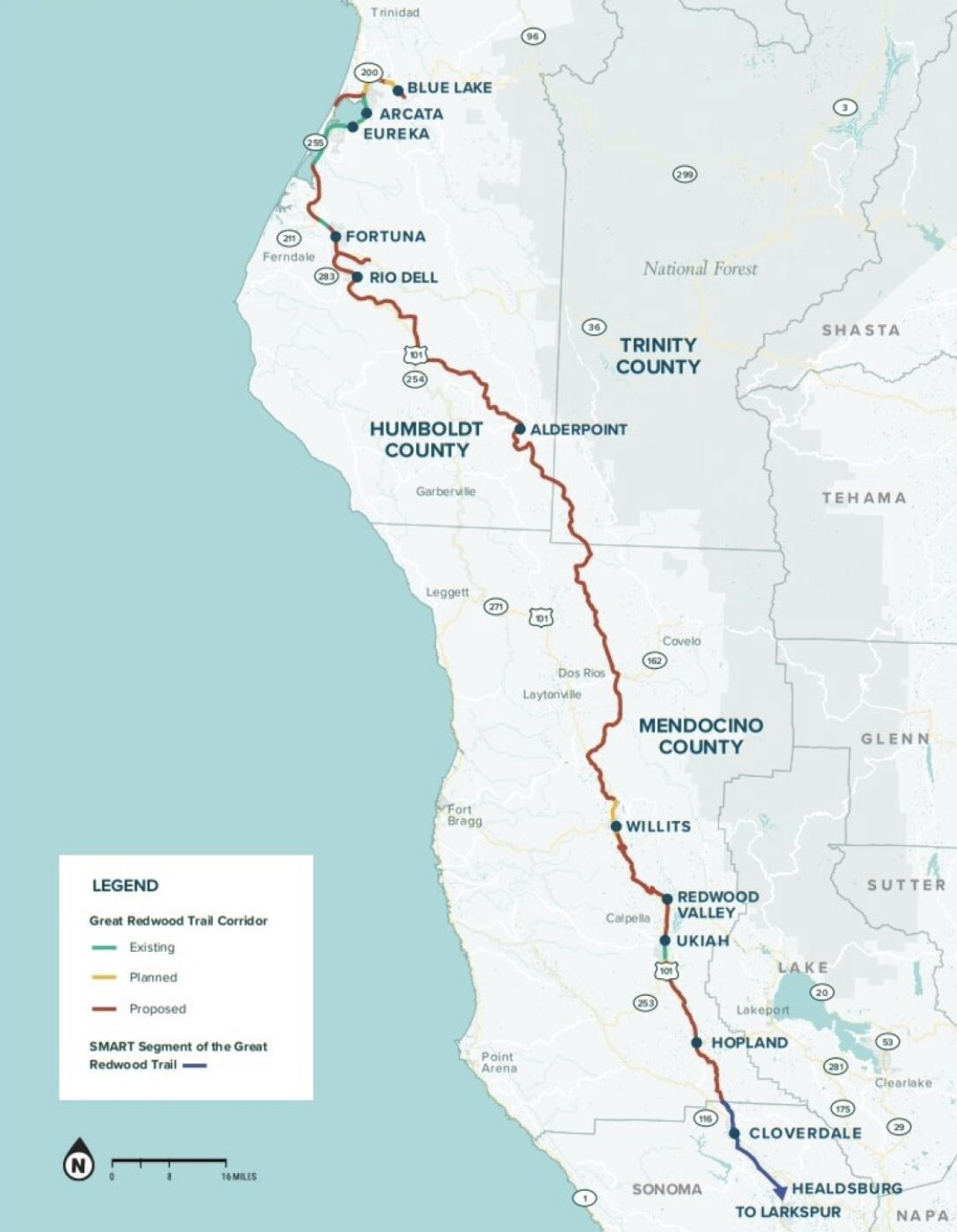
🌲 The Great Redwood Trail Agency has approved its master plan for designing, building, and managing 231 miles of trail through Mendocino, Trinity, and Humboldt counties. When the full Trail is complete, it will stretch over 300 miles across five Northern California counties, from the San Francisco Bay to Humboldt Bay, converting the former Northwestern Pacific Railroad corridor into a multi-use trail through redwood forests, river canyons, farmland, and small coastal towns. Meaning that an old railroad path will now be a recreation path for bikers and hikers a like!
- The trail will be the longest rail-trail in California and one of the longest rail-to-trail conversions in the United States. The route includes 13 major trestles, 32 bridges, and 36 tunnels, passing through some pretty cool landscapes in Northern California, including the 50-mile Eel River Canyon.
- The master plan took more than three years to develop and included over 30 community and tribal engagement events, hundreds of surveys, and formal consultations with California Native American Tribes.
Why It Matters: California is one of the busiest states in the country for outdoor recreation, so finding a new area for a major trail is a big deal, especially one threading through some of the most protected, remote, and beautiful terrain in Northern California. A 300-mile route from San Francisco Bay to Humboldt Bay, winding through old-growth redwoods and river canyons, is about as good as it gets for trail-building ambition!
Climbing
⛰️ The world's fifth 5.15d, 240 days in the making
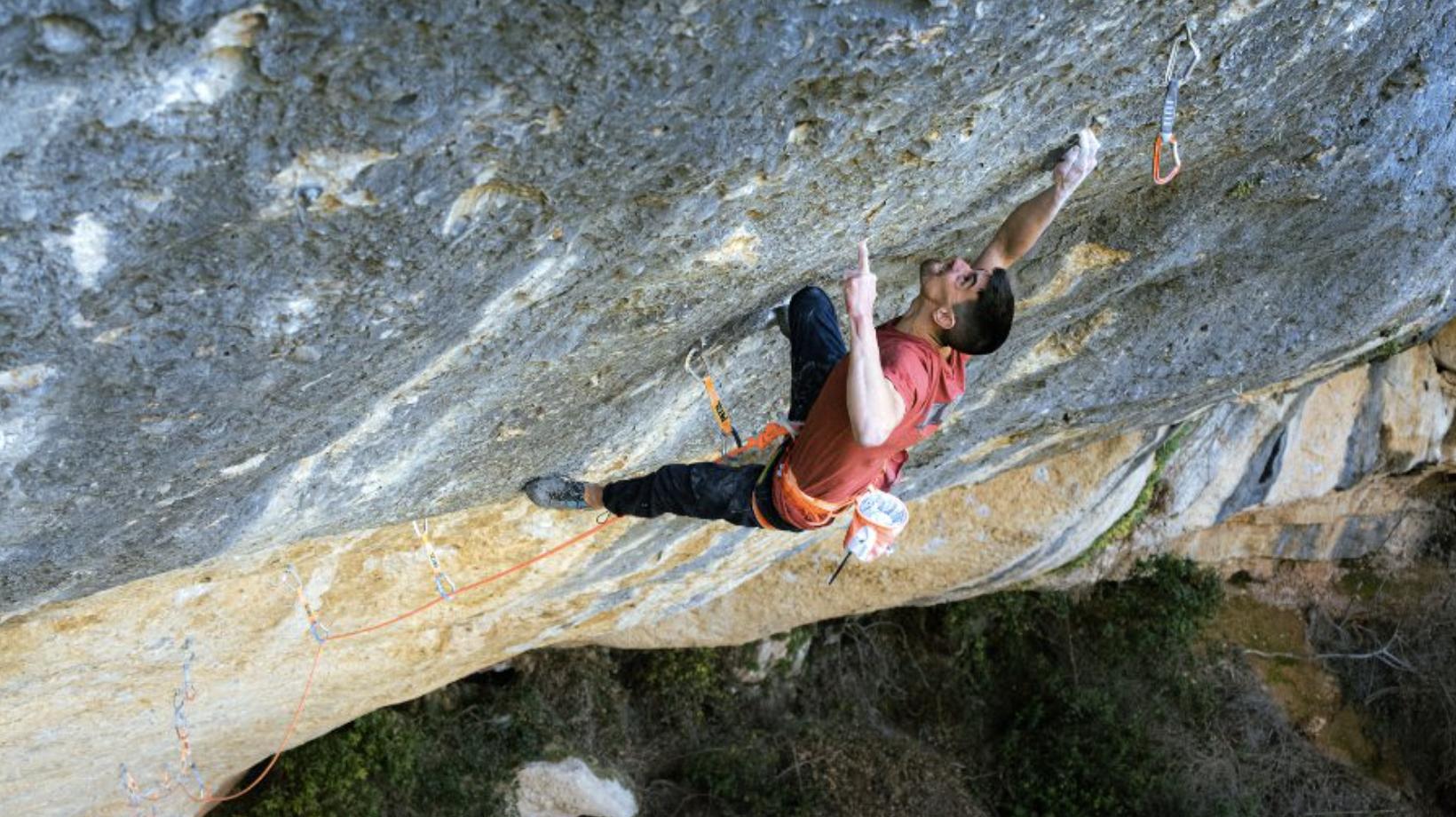
🧗 Spanish climber Jorge Díaz-Rullo has made the first ascent of Café Colombia at Margalef, Spain, proposing 5.15d (9c) for the 30-meter power-endurance test piece. If confirmed, it becomes only the fifth route at the grade in the world, joining Adam Ondra's Silence, Sébastien Bouin's DNA, Jakob Schubert's B.I.G, and Sean Bailey's Duality of Man.
- Díaz-Rullo spent 240 days projecting the route over more than four years, beginning in fall 2021. Café Colombia extends his own Café Solo (5.15b, established 2021), adding roughly 40 demanding moves on small pockets and crimps. He described the route as incomparable to anything he's climbed at 5.15b or 5.15c.
- On the grade, the 27-year-old was candid: "The route is extremely hard and pushed me to a level of effort I had never experienced before. I feel like it could go beyond 9c, but I don't have real references to assess it. That's why I've decided to propose 9c. I think it's the most sensible and honest approach." When he entered the sequences into the online grade calculator Darth Grader, it returned 5.16a.
- Díaz-Rullo has climbed at least eight routes at 5.15b, two at 5.15b/c, and two at 5.15c, including Bibliography (Céüse) and Mejorando la Samfaina (Margalef). He has sent 100 routes at the 5.14+ to 5.15d range.
- Despite years of work, the project was largely solitary. Some of the world's best climbers looked at it but none were motivated to try. "It saddens me," Díaz-Rullo said. "I would love to share the whole process with someone."
Why It Matters: There are now five routes in the world proposed at 5.15d, and each one represents a multi-year, all-consuming effort by climbers operating at the absolute ceiling of the sport. Díaz-Rullo's 240-day campaign, his honesty about the grade (he thinks it might be harder but won't claim what he can't confirm), and his solitary pursuit of a line nobody else would try make this one of the most compelling first ascents in recent memory. At 27, with a resume that already includes a dozen 5.15b+ sends, he's established himself as one of the strongest sport climbers alive.
Environment - THE NOT STOKED REPORT :(
☀️ 52 years of data, one warming trend
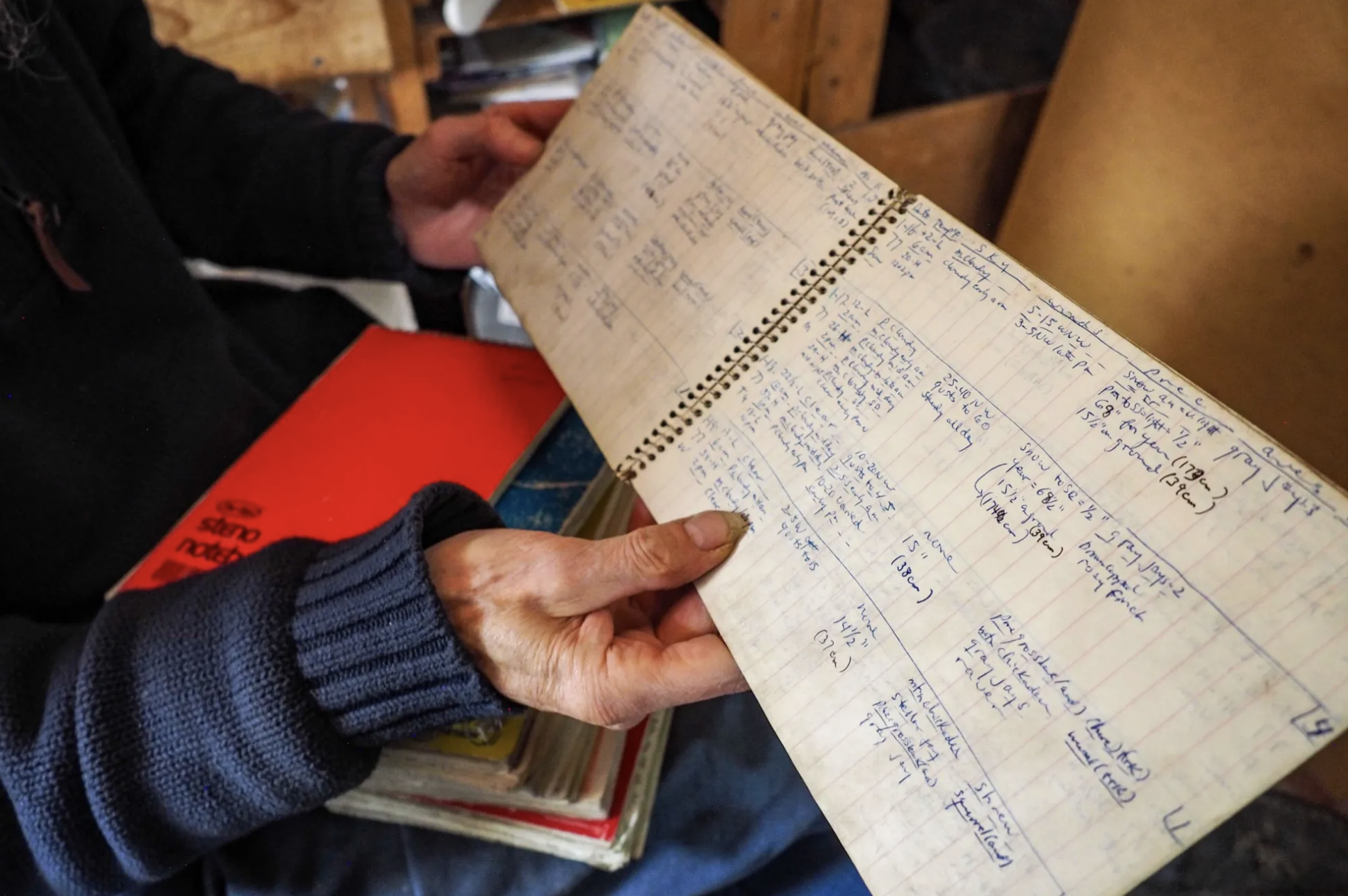
📓 From his off-grid cabin above the abandoned mining town of Gothic, Colorado, 74-year-old Billy Barr has been recording daily weather observations since 1974. His 52 years of handwritten notebooks now represent one of the most detailed and enduring climate records in the Rocky Mountains, and the data this winter is alarming.
- Through January 2026, barr counted 82 inches of snow, tracking to make 2025-26 the second-worst winter in his 52-year record. This will be the 14th of the last 15 winters with below-average snowfall.
- In January, 20 days climbed above freezing (normal is eight). In February, 24 days above freezing (normal is 10), meaning snow was melting on all but four days. February 2026 is the 20th consecutive winter month where above-freezing days exceeded his 52-year average. He's recorded 28 all-time high temperatures already this winter.
- His data serves as a foundation for research at the Rocky Mountain Biological Laboratory (RMBL), one of the most prolific high-altitude research stations in the world. Scientists use his records to study groundwater flows in the Colorado River Basin and calibrate satellite-captured snowfall.
Why It Matters: One man, 52 winters, spiral-bound notebooks, and a cabin at 9,500 feet. Billy Barr didn't set out to become a climate scientist, but his data is now one of the clearest records of warming in the American West. The numbers are stark: what used to be a freak bad winter is now the norm, above-freezing days have more than doubled, and the snowpack that feeds the Colorado River is vanishing. This is climate change measured not in models but in pencil and paper, day by day, for half a century.
🔥 The West's unprecedented snow drought is setting up a dangerous summer. Federal forecasters say the snowpack that normally acts as a natural reservoir for 75% of the West's water supply is at record or near-record lows across nearly every major river basin. The Colorado and Rio Grande Basins are in severe snow drought, one of the worst in 40 years, with recovery essentially impossible at this point in the season.
- The drought is driven by both low precipitation and persistent above-average temperatures, which have caused precipitation to fall as rain instead of snow and accelerated snowmelt. Every major western river basin experienced near-record or record warmth through December 2025.
- Consequences for summer 2026 include reduced streamflows, water supply shortages, and an extended wildfire season. Without snow on the landscape, soils and vegetation will dry out earlier than usual, and record warmth will accelerate that process.
- The Bureau of Reclamation's most probable forecast for Lake Powell shows minimum power pool elevation being reached by December 2026, meaning Glen Canyon Dam may stop generating hydroelectric power.
- Sierra snowmelt is already running two months early in Northern California. Colorado's statewide snowpack stands at about 61% of median. Parts of Summit, Eagle, Pitkin, Lake, and Park counties are under exceptional drought, the most intense level.
Why It Matters: This isn't a spring concern anymore; it's a winter emergency playing out in slow motion. The snowpack that supplies water to 40+ million people, powers dams, and keeps fire seasons in check is at historic lows with no recovery path. When federal forecasters say Lake Powell might stop generating electricity by December…. this is something to pay attention to. Wildfire seasons are getting longer, water negotiations more contentious, and the gap between what the mountains hold and what the West needs keeps widening.
My Take: I think about the compounding effects if we keep stringing together winters like this, and it worries me. It's going to touch everything: the trout in the rivers we fish, shorter rafting seasons, less water for the agricultural communities across the West that depend on snowmelt to grow food and sustain local economies. Those local impacts don't stay local. They trickle up to the bigger economies. And if Lake Powell actually drops below the level needed to power Glen Canyon Dam, that's a problem on a completely different scale. I'm very curious to see how this summer plays out and what the real downstream effects of a record-low snow year look like when they hit.
There's nothing I love more than the beautiful outdoor world on this planet, specifically the mountain West. Climate change is real, and it's scary. That love of nature, paired with the looming effects of what we're watching unfold, is what made me leave my corporate job and join a small sustainability startup.
What else is going on
- Boulder's NCAR sues Trump administration over climate lab dismantling.
- U.S. Forest Service acquires 480 acres on Mount Bross, opening DeCaLiBron Loop access.
- Massive 100-meter rockslide closes Whistler's Peak Express indefinitely.
- Alberta snowmobiler survives 700-foot free fall at Revelstoke's Big Iron Chute Out.
📚 Trailhead Trivia
Has Glen Canyon Dam ever stop generating power?
⚡ Share The Stoke
This newsletter is for mountain lovers, first chair advocates, and the ones who live for type 2 fun. Basically, the type of people whose "five-year plan" is just a list of peaks and routes!
If you know someone like that, forward this email or send them to thestokereport.com. Thanks for spreading the stoke — it seriously means a lot!
Answer!
As of early 2026, the Glen Canyon Dam has not permanently stopped generating power, but it has experienced significantly reduced output and is at risk of suspending operations. Declining water levels in Lake Powell, caused by drought and overuse, have dropped the reservoir to points that threaten the "minimum power pool" required to run the turbines.
See you soon,
Tyler
Creator — THE STOKE REPORT
