

Good morning, Stoke Crew. Winter's winding down and the mountains are starting to shift gears. Plenty to cover as we head into the home stretch of the season! Lots of good stuff in this one, hope you enjoy! Let's get into it!! Yeew!
In today's report
- ⛷️ Powder Mountain is investing $40 million
- 🏜️ The BLM just acquired a 4,000-acre ranch in western Colorado
- 🐺 Wolves & Beavers
- 🏢 Alterra Mountain Company's CEO is stepping down
MOUNTAIN BRIEFING
🏔️ 1,000 new acres at Powder Mountain
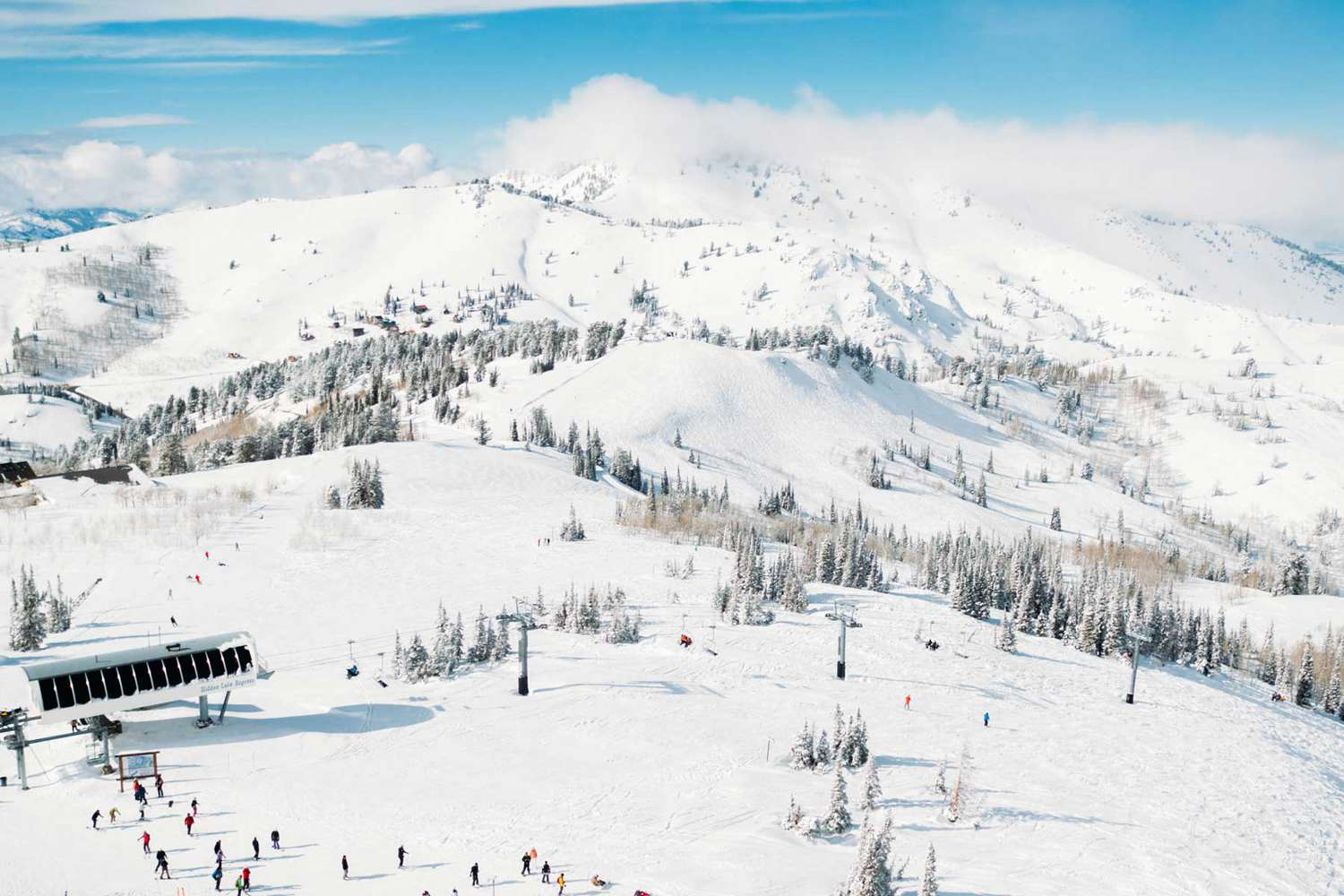
⛷️ Powder Mountain is pouring $40 million into public-side upgrades, headlined by a new chairlift opening over 1,000 acres of advanced terrain in the DMI ("Don't Mention It") zone of Wolf Creek Canyon. The Skytrac fixed-grip triple is expected to open for the 2026-27 season and will be among the steepest lifts Skytrac has ever built. The expansion pushes Powder Mountain's total skiable acreage past 6,000.
- The DMI terrain was previously only accessible via guided tours or hiking. It features open glades, chutes, and sustained steep lines with roughly 900 lift-served acres and 2,200 feet of vertical drop. All of it is expert skiing.
- Also coming for 2026-27: a new high-speed quad replacing the existing Sundown lift (improving uphill capacity and night skiing), and a new beginner-focused Doodle lift built from repurposed Sundown infrastructure.
- A 15,000-square-foot Sundown base lodge is scheduled for the 2027-28 season, housing ski school, rentals, food and beverage, and lockers.
- Powder Mountain president Brandi Hammon called DMI "some of the best terrain in Northern Utah." Netflix co-founder and Powder Mountain CEO Reed Hastings has championed a hybrid model of public and private skiing, with real estate sales on the private "Powder Haven" side partially funding public-side improvements.
Why It Matters: The biggest public-terrain expansion at one of the most interesting independent resorts in the West. Powder Mountain's hybrid public/private model is proving it can fund serious infrastructure without a mega-pass.
Local Stokelight
🌲 New public land, new public trails
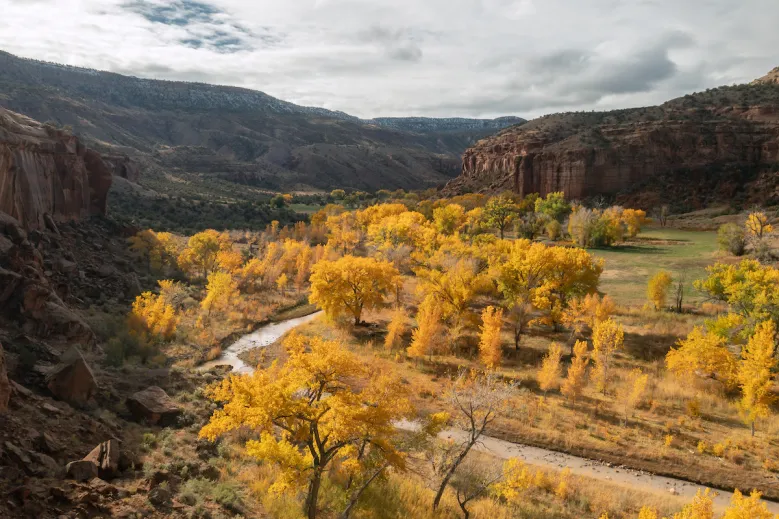
🏜️ The Bureau of Land Management has acquired the 4,012-acre Escalante Ranch, a century-old cattle operation south of Grand Junction that spans nearly 30 miles from the Gunnison River to the top of the Uncompahgre Plateau. The acquisition, funded by a $6.9 million Land and Water Conservation Fund allocation, expands the 210,172-acre Dominguez-Escalante National Conservation Area.
- The property includes 7 miles of the Gunnison River, 8 miles of Escalante Creek, roughly 900 acres of irrigated hay fields, and water rights to approximately 70 cubic feet per second. It's home to desert bighorn sheep, mule deer, elk, mountain lions, black bears, golden eagles, and wild turkeys.
- The Conservation Fund acquired the ranch in 2024 (with a Great Outdoors Colorado loan) when it was listed for sale and held it until BLM secured federal funding. Colorado BLM Director Doug Vilsack called it a "monumental acquisition that checks all three boxes around conservation, recreation and agriculture."
- The BLM's management plan promises continued livestock grazing, agricultural use, wildlife and habitat restoration, and recreational access. It is among the largest BLM acquisitions in Colorado history.
Why It Matters: This is one of those rare public land acquisitions that everyone can get behind: 4,000 acres of canyon country with 15 miles of river and creek access, desert bighorn herds, and a plan that keeps ranching alongside recreation and conservation. In a political moment where public land acquisitions are increasingly contested, this one was funded, reviewed, and completed with broad support.
🚴 The next 1.75-mile segment of the Clear Creek Trail through Clear Creek Canyon is expected to open later this year, extending the popular trail from the CCR Trailhead (which opened in November 2025) to the Huntsman's Rancho Trailhead. The $80 million project is part of the larger 65-mile Clear Creek Trail (formerly Peaks to Plains Trail), which will one day connect the South Platte Trail in Denver to the headwaters of Clear Creek at Loveland Pass.
- The Huntsman segment includes two new bridges spanning Clear Creek, a bridge over US-6, an underpass beneath the highway, multiple creek access points, and parking for approximately 70 vehicles. It features elevated concrete viaducts similar to the road decks in Glenwood Canyon, built for the narrow canyon corridor.
- Once this segment opens, roughly six miles will remain to complete the 13.5 miles of trail in Jefferson County. That final stretch is estimated at $80 million and targeted for 2033.
- The trail has quickly become one of the most popular multi-use trails in the Denver metro area, attracting runners, cyclists, walkers, and even families with strollers into a canyon previously inaccessible except by car on the narrow two-lane US-6.
Why It Matters: Clear Creek Canyon is one of the coolest and closest geological landscapes along the Front Range, and until recently, you could only experience it through a car window. This trail is turning a 13-mile canyon of soaring rock walls and whitewater into a world-class recreation corridor serving 3 million metro Denver residents. The engineering is impressive (mini-Glenwood Canyon viaducts for a 10-foot-wide bike path), and each segment that opens expands access to a landscape that's been off-limits to hikers and cyclists for generations.
Enviroment
🦫 Wolves & beavers
🐺 The Center for Biological Diversity is petitioning Colorado Parks and Wildlife to tighten rules around when reintroduced wolves can be legally killed, demanding ranchers first exhaust a detailed list of nonlethal hazing methods and that CPW provide written, evidence-based determinations before issuing lethal control permits.
- The push comes as at least 26 wolves tied to relocation efforts are now on the ground in Colorado, including 13 surviving translocated wolves, four pups from the Copper Creek pack, and pups from the One Ear and King Mountain packs. At least one additional pack has formed.
- Colorado's wolf population is especially vulnerable after U.S. Fish and Wildlife Service blocked CPW from importing 15 wolves from British Columbia in January, halting the planned third round of releases.
- The Center wants proof that nonlethal tools (fladry, flashing lights, livestock guardian dogs, range riders, carcass removal) have been used before CPW will issue kill permits for wolves confirmed to have killed livestock. They also want evidence from wolf kills to be independent from compensation claims.
- Separately, a ballot initiative (Initiative 13) seeking to end wolf reintroduction by December 31, 2026 is gathering signatures for the November ballot.
Why It Matters: Colorado's wolf program is at a crossroads. The population is growing (26+ wolves, multiple packs breeding) but remains fragile. The debate over when wolves can be killed is the central tension of the entire reintroduction effort: too permissive and the population can't establish, too restrictive and rancher support evaporates. Both sides are escalating through petitions, legislation, and the ballot.
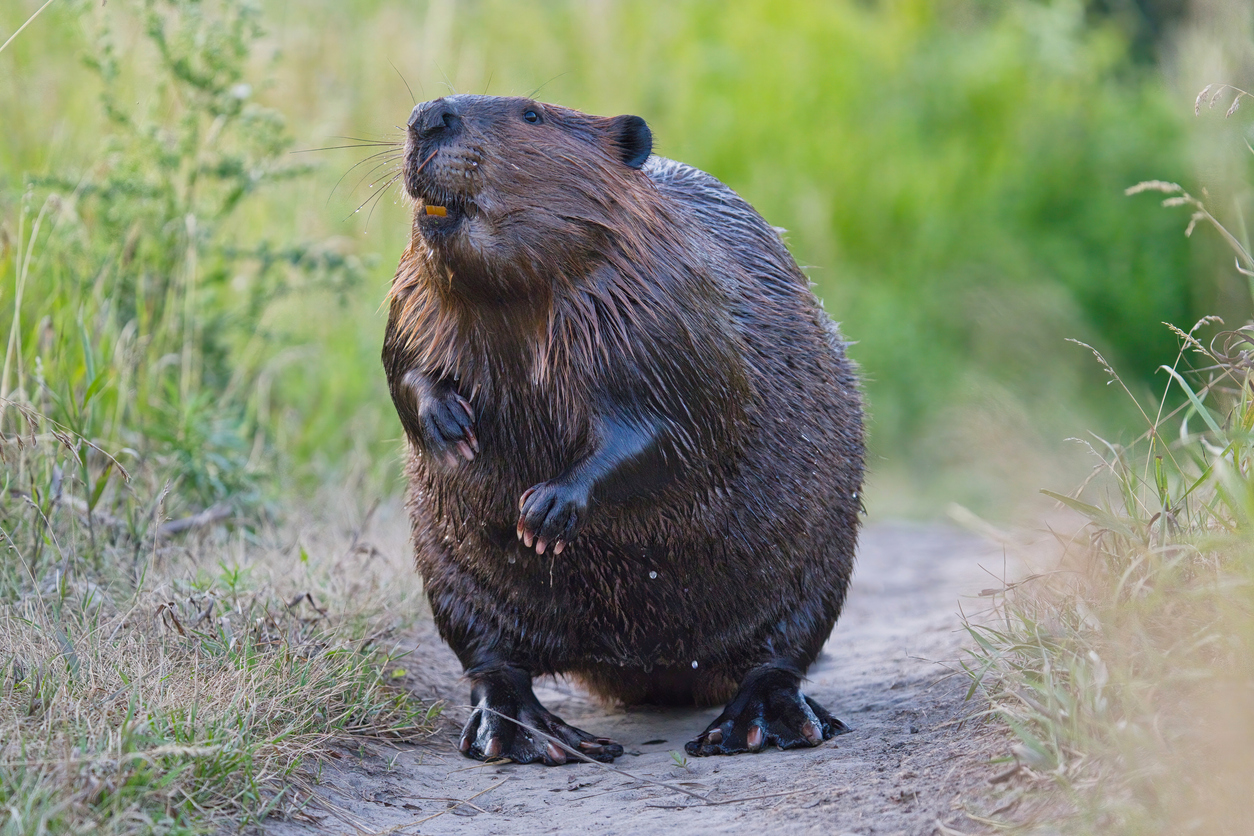
🦫 A new Colorado bill would ban all private killing of beavers on state and federal public lands, framing the animals as critical allies in fighting wildfire and drought. House Bill 1323 was introduced by a bipartisan group of legislators alongside conservation groups including the Center for Biological Diversity and Western Watersheds Project.
- Supporters argue there is currently no limit on how many beavers can be taken from public lands in Colorado for a $35 permit, at a time when biologists and forestry experts are making beaver-created wetlands a keystone strategy for wildfire resilience and water storage.
- "Our public lands desperately need beavers to help with wildfire resilience and to mitigate the climate crisis," said Delaney Rudy of the Western Watersheds Project. "Beavers work for free to create wetlands that help slow and contain fires, provide essential wildlife habitat and store water."
- The bill is especially urgent given Colorado's historically low snowpack this winter, which heightens drought and wildfire risk heading into summer.
- Hunting and trapping advocates see the bill as part of a broader push to eliminate all hunting and trapping, pointing to the simultaneous wolf protection petition and fur sale ban as evidence of a coordinated campaign. The debate has been contentious enough that CPW required security screening at its most recent commission meeting.
Why It Matters: This bill sits at the intersection of wildlife management, wildfire policy, and the broader culture war over hunting in Colorado. The practical argument is strong: beavers build wetlands that store water and slow fires, and Colorado needs all the help it can get heading into a fire season preceded by record-low snowpack. The political argument is trickier: hunting groups see this as another salvo in a campaign to end all trapping, and the tension has already required metal detectors at public meetings.
Business
👔 Alterra's CEO out, industry in flux
❄️ Alterra Mountain Company CEO Jared Smith announced he will step down at the end of this season, the company said Tuesday. No reason was given for his departure. Smith joined Alterra as president in June 2021, coming from Ticketmaster where he served as president and global chairman, and was promoted to CEO in August 2022.
- During his tenure, Alterra grew its portfolio through acquisitions including Arapahoe Basin, Schweitzer (Idaho), Snow Valley (California), Ski Butlers, and two heli-skiing operations in British Columbia. The company has invested over $2 billion into its resorts over the past eight years, most recently a $400 million expansion at Utah's Deer Valley.
- An executive committee of the board, including ownership representatives from KSL Capital Partners and Henry Crown & Company along with former CEO Rusty Gregory, will lead day-to-day operations until a new CEO is appointed. Smith will serve as an advisor over the next year.
- The announcement comes during a difficult season: historically low snow across the West, rising Ikon Pass prices (nearly 30% higher than the rival Epic Pass at full adult pricing), and less than a week after the 2026-27 Ikon Pass went on sale.
- Alterra is a private company and does not disclose financial details as a public company would. It operates over 70 destinations across the U.S. and Canada, including Steamboat, Winter Park, Arapahoe Basin, Deer Valley, and Palisades Tahoe.
Why It Matters: The CEO of one of the two companies that control most of American skiing is out, with no successor named and no explanation given. Smith's departure comes at a pivotal moment: Alterra just launched its most expensive Ikon Pass ever, the industry is reeling from a brutal low-snow season, and the company's aggressive acquisition strategy (including the Deer Valley mega-expansion) demands steady leadership. Former CEO Rusty Gregory stepping back into the "office of the CEO" signals this wasn't planned far in advance.
📚 Trailhead Trivia
What is a beaver home called?
⚡ Share The Stoke
This newsletter is for mountain lovers, first chair advocates, and the ones who live for type 2 fun. Basically, the type of people whose "five-year plan" is just a list of peaks and routes!
If you know someone like that, forward this email or send them to thestokereport.com. Thanks for spreading the stoke — it seriously means a lot!
Answer!
A Lodge!
See you soon,
Tyler
Creator — THE STOKE REPORT
