

Good morning, Stoke Crew. Hope everyone had a nice long weekend of fun activities. Sorry for no newsletter on Tuesday, I was getting back late from my adventures and needed some rest. But we're back! Hope you enjoy. Cheers!
In today's report
- 🧗 Youngest person to top El Cap
- ♻️ The Freeride World Tour's sustainability program
- 🛶 Arkansas River outfitters brace for a low-water summer
- 💧 Shoshone water rights deal
- 🌲 Ted Turner leaves 2 million acres of Western land protected for good
- 🚲 Downhill World Cup returns to Loudenvielle
Today's Stoke Story
🥇 A 7-year-old just topped El Cap
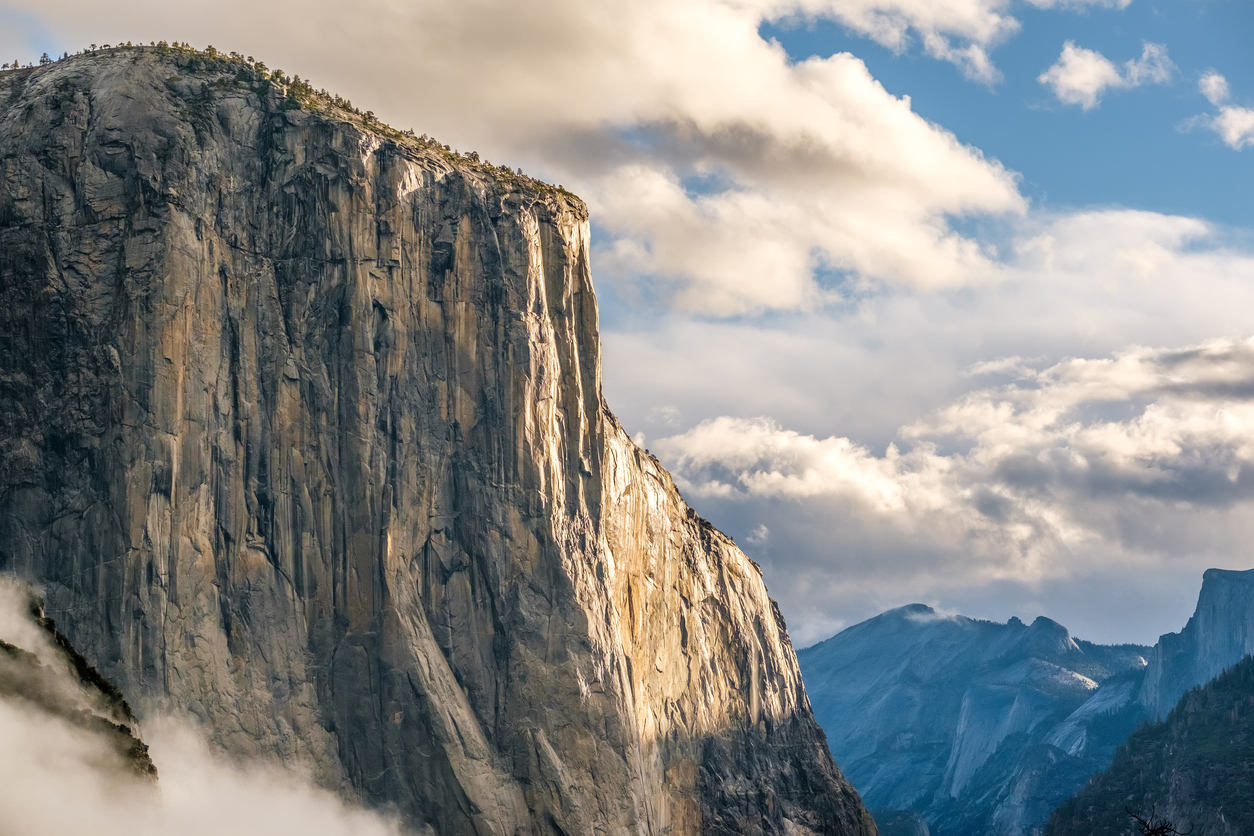
🧗 A 7-year-old Colorado Springs kid named Joey "Danger" Evermore became the youngest person ever to top out El Capitan, completing a five-day ascent of the 3,000-foot granite wall on May 21. Joey started the climb on Sunday, May 17, as a six-year-old, turned seven on a portaledge mid-route, and topped out Thursday night.
- The record was previously held by his older brother Sam, who climbed El Cap at age 8 in 2022. Middle brother Sylvan did the same at age 8 last year.
- The ascent has reignited a long-running debate in the climbing community over style. Joey used a technique called jugging, sliding up fixed ropes via mechanical ascenders rather than pulling moves on the rock himself.
- Joey trained for months with rope work in the family's backyard and climbing gyms several nights a week, and outdoor climbing trips on weekends. The family climbed the Nose route, El Cap's most iconic line.
Why It Matters: Jugging the entire Nose is a brutal physical workout that would crack most adults by day two. Joey did five days of it at seven years old. Whether or not it counts as "climbing" in the traditional sense, the kid earned the respect. I mean come on... what were you doing at seven years old?
Skiing
⛷️ Skiing emissions
♻️ The Freeride World Tour's biggest emissions source isn't snowcats or helicopters, it's the people driving to watch. According to FIS (International Ski and Snowboard Federation), which acquired the tour in 2022, 70% of FWT emissions come from travel, with 57% from fan travel alone in private cars. To tackle that, the tour launched its "Take the Train" campaign at this year's Xtreme Verbier finale, offering 230 fans a 40% discount on Verbier ski passes for arriving by rail. The result: 12,400 miles of car travel cut and 6.5 tons of CO2 prevented from one event.
- The tour reimburses 100% of athlete public transportation costs. In 2025, 38 riders combined for 28,000 miles by train, avoiding 14.7 tons of CO2. In 2026, 32 athletes covered roughly 18,600 miles on lower-emission travel.
- Helicopter filming was cut as of the 2024-25 season in favor of drones. Staff carpool to events. Plastic cutlery is gone from the Verbier finals.
- The tour is targeting carbon neutrality by 2028, or 2030 at the latest, and now tracks all emissions through the FIS CO2 Calculator. Public transport access remains the biggest barrier, since many event venues don't have rail service, and traveling with skis is its own pain.
Why It Matters: Carbon neutrality by 2028 is ambitious for any tour. But the FWT is doing the unsexy work, measuring Scope 1, 2, and 3 emissions, building behavioral incentives, killing the heli-cam, and making real changes that have impact! That's how it gets done. Less marketing, more math!
Environment
🌲 Water & Conservation
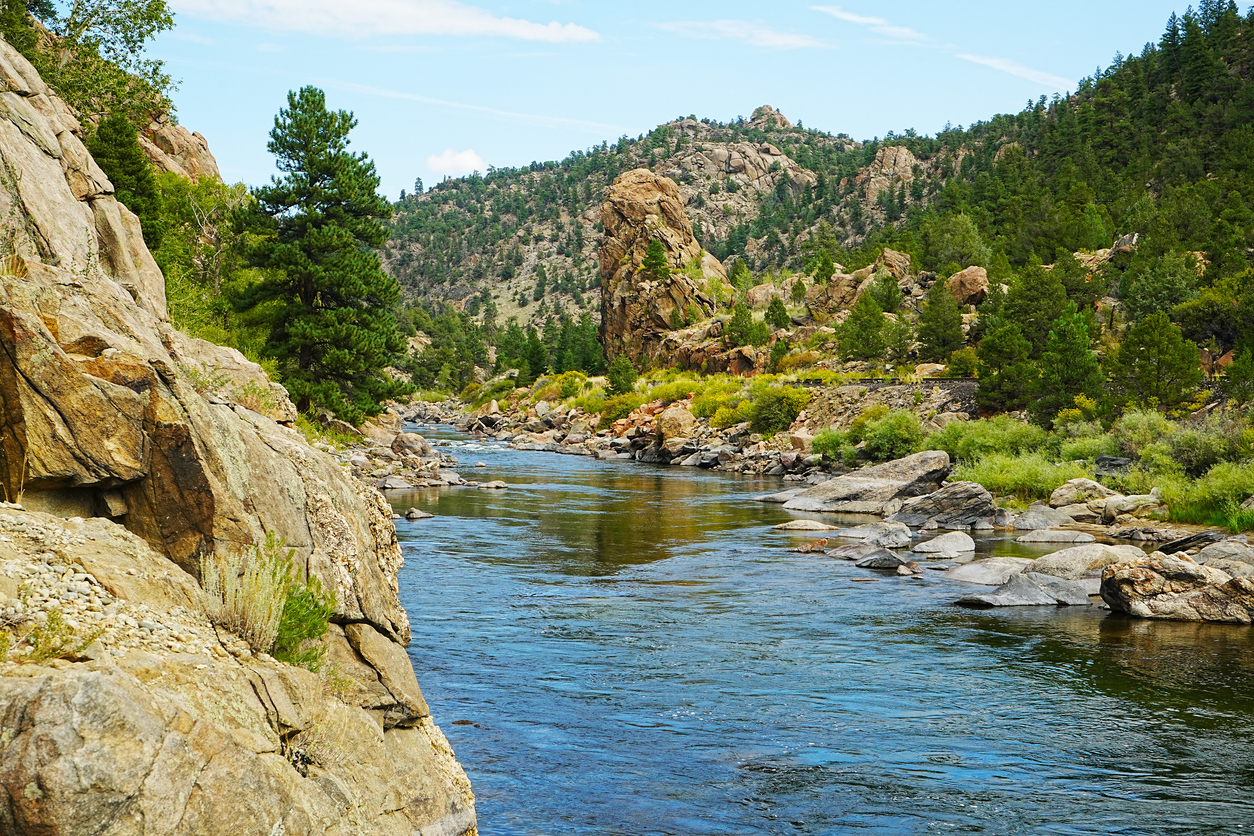
🛶 Colorado's biggest rafting river is heading into one of its driest seasons in decades. The Arkansas River basin sat at 24% of normal snowpack in late May, after the warmest March in state history wiped out an already weak winter. About 45 outfitters in the Arkansas Headwaters Recreation Area host roughly 250,000 commercial rafting visits a year between Leadville and Cañon City, putting $50 to $75 million into local economies. Almost 75% of those guests come from out of state. This year's outlook puts that whole machine on edge.
- Compare 2002 and 2012, the two driest rafting seasons in recent memory. In 2002, statewide rafting visitation dropped 68%. In 2012, commercial rafters dropped 21%.
- Outfitters are adapting. Smaller boats, inflatable kayaks (duckies), and stand-up paddleboards are replacing big rafts. Trips will run longer. Lower sections with more water, like the Royal Gorge, will see more traffic. AHRA delayed preseason permit payments to give outfitters breathing room.
Why It Matters: The Arkansas River economy isn't a vacation, it's a livelihood for dozens of small mountain towns. When the river runs low, the impact isn't just a worse rafting trip. It's local businesses staring down a 20-to-70% drop in revenue with no replacement income. That's the real cost of a record dry winter and climate change.
Personal Note: I was just in Salida over the long weekend doing a little camping, rafting, and biking, and the effects of the dry winter are absolutely there. I've never seen the river that low. There were multiple times on my float where I got stuck on rocks and had to climb out to drag my boat into deeper water. It's sad to see, especially right now when we should be at high runoff.
💧 The Trump administration just released $40 million for the Colorado River District's purchase of the historic Shoshone water rights (Glenwood Canyon section of the Colorado River), ending 17 months of frozen funding and pushing one of the West's most important water deals across the finish line. The grant was originally awarded under the Inflation Reduction Act in the final hours of the Biden administration in January 2025, then paused days later by Trump's "Unleashing American Energy" executive order. With the release, the project's total funding now stands at $97 million of the $99 million needed to buy the rights from Xcel Energy.
- The Shoshone water rights are among the oldest and most senior on the Colorado River, dating to 1902 and 1929. Because they're non-consumptive (water used to spin turbines at the Glenwood Canyon hydropower plant gets returned to the river) they effectively keep flows in the Colorado year-round, protecting fish habitat, downstream cities, and Western Slope farmers and outfitters.
- The Colorado River District has been working on the deal since 2023. The district will own the rights and lease them back to Xcel so the power plant keeps running. When the plant isn't generating, the water stays in the river.
- The deal still needs a water court decree and Public Utilities Commission approval, a process that could take years.
- The funding came through the U.S. Bureau of Reclamation, which had been sitting on the grant for nearly a year and a half. The money comes from the Inflation Reduction Act, which provides federal funding for clean energy, climate action, and community infrastructure. Seven of Colorado's frozen IRA water grants have now been released. Nine more remain in limbo.
Why It Matters: This is one of the largest permanent water conservation wins the West has seen in decades. Here's the simple version: there's an old water right tied to the hydropower plant in Glenwood Canyon, dating back to 1902, that forces water to keep flowing down the Colorado River so the plant can use it. As long as the plant runs, the river stays full. But when the plant goes offline, that protection disappears, and Front Range cities can divert more water before it ever reaches the Western Slope.
This deal fixes that. The Colorado River District is buying the right and converting it into a permanent instream flow, meaning the water has to keep flowing down the river no matter what. Plant on, plant off, plant gone forever, doesn't matter. The river stays wet. That's not a temporary patch, it's a permanent structural change to how water moves through the upper Colorado!
🌲 Ted Turner (founder of CNN) died on May 6 at age 87, and the roughly 2 million acres of Western ranchland he spent his life buying and restoring will stay protected. Turner Enterprises confirmed his lands across Montana, New Mexico, Colorado, and Nebraska will continue under conservation management, with much of it already locked in by permanent easements. The 113,000-acre Flying D outside Bozeman carries one of the largest easements in America. The 363,000-acre Armendaris in New Mexico has the nation's second-largest.
Why It Matters: While all that land stays private, the public mostly can't set foot on it. But honestly? It could be a lot worse. Instead of subdivisions, drill pads, or trophy mansions, those 2 million acres get to sit untouched forever. Bison, wolves, healthy rivers, real habitat. For now, it's private, it's protected, and it's not going anywhere.
Biking
🇫🇷 Downhill World Cup: France
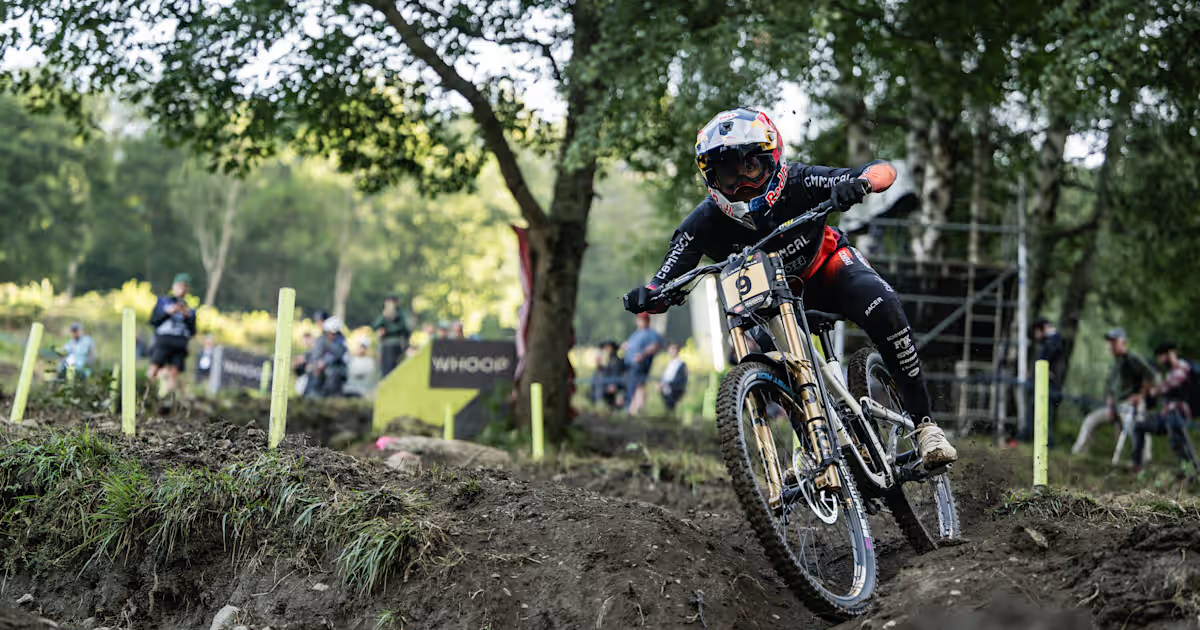
🚲 Downhill World Cup racing is back this weekend in Loudenvielle, France, kicking off the European leg of the 2026 season. Round one in South Korea delivered some wild results: 19-year-old Asa Vermette won his first elite World Cup, beating Loic Bruni by over 1.5 seconds and putting the rest of the men's field on notice. Now the series moves to a course riders actually know, with qualifying Saturday May 30 and finals Sunday May 31. Vali Höll leads the women's standings after her opening win, and Aletha Ostgaard sits atop the junior women's table.
- The Loudenvielle course is 1.57 miles with split personality. The top is flat-out and fast, where carrying momentum is everything. The bottom turns steep and technical in the woods, which is where the race is actually won. Last year's winners, Jackson Goldstone and Gracey Hemstreet, dropped the biggest splits in the lower steeps.
- Bruni is set to make his 100th World Cup start this week, a milestone for one of the most consistent racers ever. Goldstone is looking for redemption after a disappointing round one. Tahnee Seagrave is out four to six weeks with an elbow injury from Q1 in Korea.
- Pinkbike predictions for the women are Hemstreet, Höll, and Harnden. For the men: Amaury Pierron (who crashed out of a winning ride in Korea), Nathan Pontvianne, and first-year elite Till Alran. The race is expected to draw 60,000+ spectators over four days across the venue. Rain is forecast both days.
- The Loudenvielle course is still relatively new on the circuit. Three previous World Cups here have each produced different winners on both the men's and women's sides, making it one of the least predictable venues on the calendar.
What else is going on
- Winter Park dog walker seriously injured by moose.
- Mammoth Mountain extends ski season through June 7 after cold temps and fresh snow boost coverage, becoming one of few North American resorts operating in June.
- Banff's famous grizzly bear 142 lost a cub that was struck by a train, marking the 19th grizzly death on park railways since 2005.
- Mount Hood climber pinned by 16,000-pound boulder rescued after two-hour operation.
📚 Trailhead Trivia
How old is the Colorado River?
⚡ Share The Stoke
This newsletter is for mountain lovers, first chair advocates, and the ones who live for type 2 fun. Basically, the type of people whose "five-year plan" is just a list of peaks and routes!
If you know someone like that, forward this email or send them to thestokereport.com. Thanks for spreading the stoke — it seriously means a lot!
Answer!
The Colorado River is generally estimated to be about 5 to 6 million years old
See you soon,
Tyler
Creator — THE STOKE REPORT
