

Good morning, Stoke Crew.We're less than a week away from 7 PM sunsets! Longer days, more daylight for after-work adventures, what's not to love? Let's get into it.
In today's report
- ⛷️ Jaelin Kauf led another all-American moguls podium sweep in Japan
- 🏅 Jessie Diggins set the record for most World Cup starts in cross-country skiing history
- 🐻 Alaska has killed nearly 200 grizzly bears from helicopters to save a struggling caribou herd
- 🐟 California is investing $10 million in salmon habitat restoration and exploring whether to bring grizzly bears back after a century
MOUNTAIN BRIEFING
❄️ Still winning after the Olympics

⛷️ Jaelin Kauf picked up right where the Olympics left off, winning the dual moguls World Cup at Taira Ski Area in Japan to lead another all-American podium sweep. The big final was a Team USA heavyweight bout between Kauf and Olivia Giaccio, with both athletes knocked off their lines by slushy spring conditions between the first and second jumps. Kauf regrouped and took the win.
- This marks the second time this season the U.S. women have swept a dual moguls podium. Even with Liz Lemley sitting this one out, Americans held the top four spots in the overall standings.
- Kauf arrived from Milan-Cortina with three career Olympic silver medals (two from 2026, one from 2022). She has 16 World Cup victories, 50 career podiums, and won all three Crystal Globes last season.
- The circuit heads to Azerbaijan for the season finale, where the U.S. women's team will look to close out one of the most dominant seasons in moguls history.
Why It Matters: The U.S. moguls program isn't just winning the Olympics, it's running the entire World Cup circuit. Sweeping a podium without your Olympic gold medalist even racing is a statement about depth. Kauf is 29, still the fastest woman on the circuit, and showing zero signs of slowing down.
🏅 Jessie Diggins set the record for most World Cup starts in cross-country skiing history during the skiathlon event in Falun, Sweden over the weekend. The 34-year-old, who is retiring at the end of this season, finished second in a tight finish behind Norway's Heidi Weng.
- Diggins is the most decorated American cross-country skier of all time with four Olympic medals (gold, silver, two bronzes), three overall World Cup titles (2021, 2024, 2025), seven World Championship medals, and three Tour de Ski victories.
- At Milan-Cortina, she crashed during the opening skiathlon, bruised her ribs, and still fought through visible pain to win bronze in the 10km freestyle.
Why It Matters: Diggins didn't just break records, she redefined what American cross-country skiing could be. First Olympic gold, first World Cup overall title for a U.S. woman, and now the all-time World Cup starts record. Her openness about eating disorder recovery and mental health advocacy has been as significant as any medal. Lake Placid will be an emotional sendoff.
🎿 33-year-old Patrick Halgren is heading to his second Paralympic Games in Cortina. He trains at Winter Park Resort (where he's lived and worked for 10 years) and the U.S. Olympic & Paralympic Training Center in Colorado Springs, which he joined a year and a half ago
- Halgren lost his left leg above the knee in a 2013 accident. His twin brother, Lucas Sven, encouraged him to take up para skiing. Sven passed away in December 2016, and Halgren has trained in his honor ever since.
- At the 2022 Beijing Paralympics, Halgren placed 24th in slalom, hitting his goal of a top-25 finish. In Cortina, he'll compete in five events including his favorites: the downhill and Super-G.
Why It Matters: Halgren's story is a reminder that the Paralympics aren't just about medals. Overcoming challenges in life to representing Team USA, with his parents watching in Europe for the first time, is exactly the kind of story the Games were built for. The Paralympics open March 6.
Environment
🐻 Grizzlies, caribou, and salmon
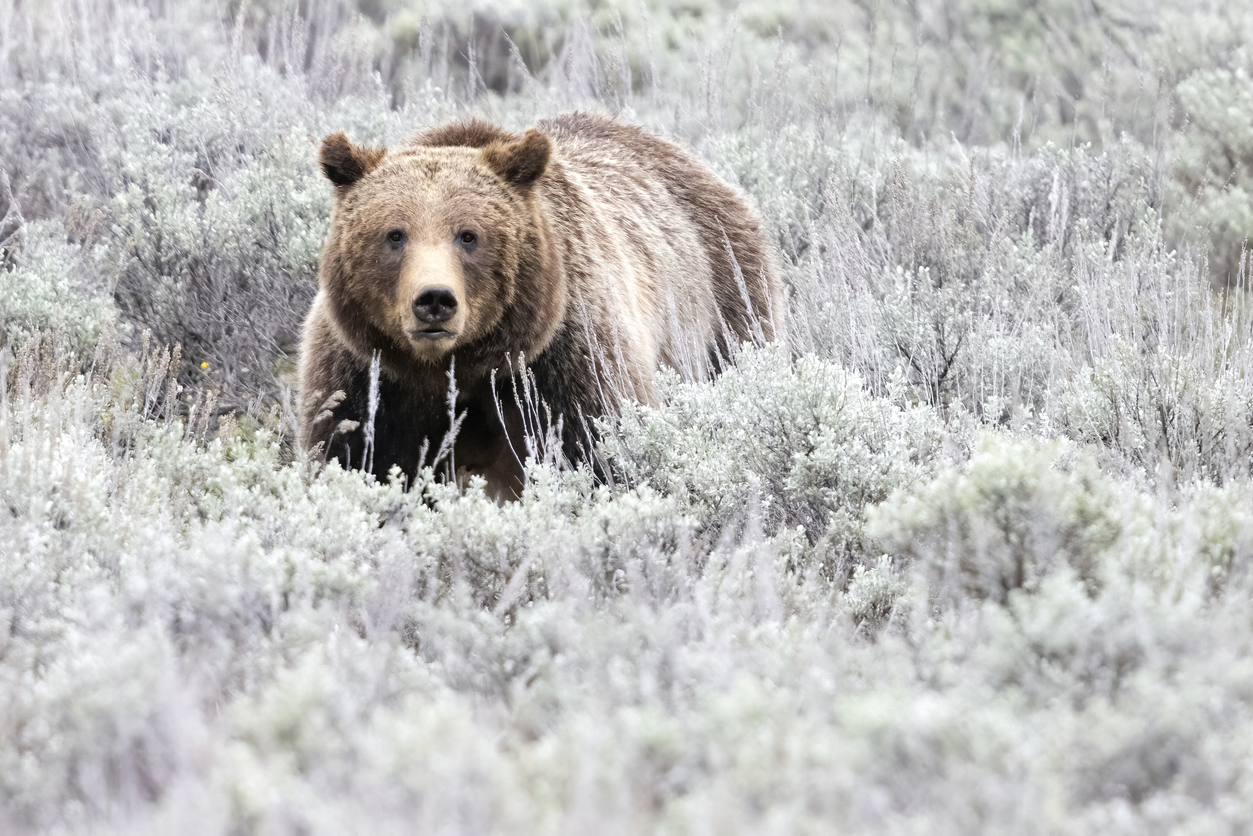
🐻 California lawmakers are weighing whether the state's most iconic animal could one day return to the wild. Senate Bill 1305 would require the Department of Fish and Wildlife to develop a science-driven feasibility plan for reintroducing grizzly bears to California, with a deadline of June 30, 2028.
- The bill does not authorize releasing any bears. It calls for research, public engagement, and consultation with California Native American tribes before any next steps.
- Grizzlies once roamed from coastal valleys to the Sierra Nevada. The last confirmed California grizzly was killed in Tulare County in 1924. The species has existed only on the state flag since.
- The feasibility study would assess whether modern California still has enough habitat for grizzlies to survive without harming ecosystems or creating major human conflicts.
Why It Matters: This is still just a study, not a release plan, but the fact that it's being seriously legislated is significant. California grizzlies have been gone for a century. Whether the state that put a bear on its flag is willing to actually live alongside one again is a question that cuts to the core of what conservation means in the 21st century.
🐟 California's Wildlife Conservation Board approved nearly $60 million in grants across 18 counties, with roughly $10 million going to five salmon restoration projects in Northern California. Key investments include $2.9 million for the East Fork Scott River, $1.85 million for Battle Creek, and $3.7 million for the Tuolumne River, all focused on reconnecting floodplains and improving spawning habitat for coho, Chinook, and steelhead.
Why It Matters: Cold, connected rivers are what salmon need to survive, and California is running out of both as the climate warms. These projects are targeted, specific investments in actual habitat (not studies or plans) at a moment when salmon populations are under severe pressure across the West.
🐻 Alaska has killed nearly 200 grizzly bears and about 20 wolves over the past three years in an attempt to save the struggling Mulchatna caribou herd. The herd peaked at roughly 200,000 animals in the 1990s and crashed to an estimated 12,000 by 2022. Hunting has been prohibited since 2021.
- State wildlife employees have been helicoptering over calving grounds and shooting bears from the sky. The program has sparked lawsuits, op-eds, and intense pushback from wildlife advocates and former state officials.
- Alaska Native organizations, including the statewide Alaska Federation of Natives and the Orutsararmiut Native Council in Bethel, have passed resolutions supporting the program. For communities hundreds of miles from the road system, caribou is a critical food source, and the herd's decline has coincided with low salmon returns and rising grocery prices.
- State officials cite a 30% increase in herd numbers since the culling began (from roughly 12,000 to about 16,000). Critics say it's too early to credit the program and that the real drivers of decline (climate change, disease, nutritional stress, overgrazing from the 1990s peak) haven't been addressed. The state hasn't completed a formal habitat assessment.
- Tundra caribou numbers across the Arctic have fallen 65% in recent decades, according to a 2024 NOAA report. The Mulchatna range remains largely roadless and wild (about six times the size of Vermont), but climate shifts (less snow, unfreezing rivers, rain-on-snow events) are making conditions harder for both caribou and the people who depend on them.
Why It Matters: This story sits at the intersection of Indigenous food sovereignty, wildlife management science, climate change, and the limits of what government can actually do when ecosystems shift. There are no easy answers: local communities are going hungry, caribou herds are crashing across the Arctic, and the debate over whether killing predators helps or just treats a symptom is far from settled.
📚 Trailhead Trivia
How fast can a grizzly bear run?
⚡ Share The Stoke
This newsletter is for mountain lovers, first chair advocates, and the ones who live for type 2 fun. Basically, the type of people whose "five-year plan" is just a list of peaks and routes!
If you know someone like that, forward this email or send them to thestokereport.com. Thanks for spreading the stoke — it seriously means a lot!
Answer!
Up to 30 mph! The good news is, you don't have to be faster than the grizzly bear. You just gotta be faster than your friend...
See you soon,
Tyler
Creator — THE STOKE REPORT
