

Good morning, Stoke Crew. Pretty standard edition for you today. Colorado's been running light on snow and heavy on warmth this winter, so here's to hoping the mountains get a piece of this storm that everyone's talking about. Let's get into it! Oh ya and happy belated Bday to my boy Joey C!!
In today's report
- New Climbing Send
- Kings & Queens of Corbet's Results
- Olympic Skiing Updates
- Colorado River States Cannot Meet Agreement
- Wolverines Back In Colorado

MOUNTAIN BRIEFING
😵 Climb and Ski Sends !
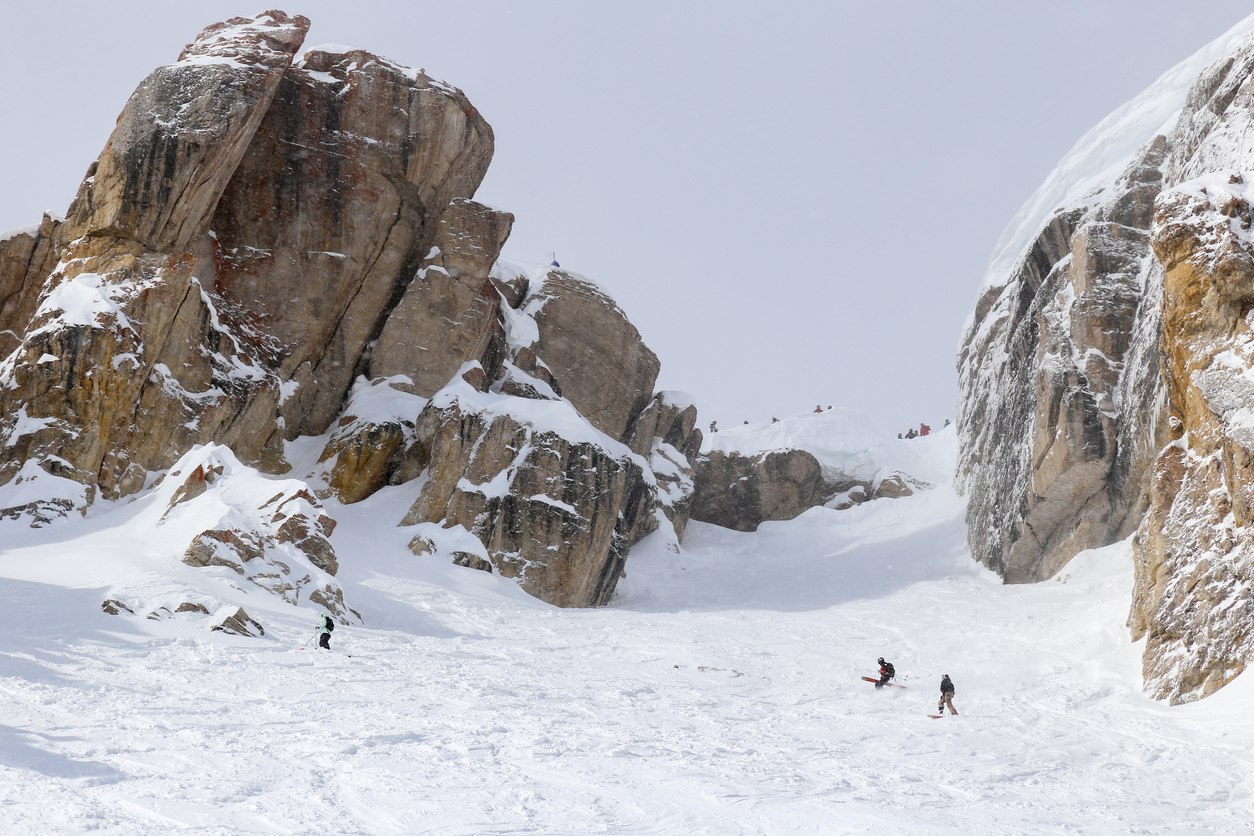
Jackson Hole's freeride competition crowned a power couple Friday when Tristen Lilly and Piper Kunst each walked away with $10,000 King and Queen titles at the ninth annual Kings and Queens of Corbet's. Tristen, a Salt Lake City-based skier who grew up in Maine, dominated men's ski with a run featuring a front flip into the couloir, a backflip on a second kicker, a massive cliff drop, and a huge bottom booter! Check out his run here.
Piper, in her fourth appearance at the event, reclaimed the Queen crown she first won in 2022 by stomping a backflip into Corbet's (becoming only the second woman ever to land one in the chute), charging a high-speed descent, and finishing with a huge front flip off the bottom jump. See her run!
Ten years after it was first climbed, El Chamán Loco (5.14b, 400 meters) at El Salto finally saw its first free ascent when Guadalajara's Álvaro Basich topped out in December 2025 after a three-day ground-up push. The 14-pitch route attacks the steepest section of the wall through a series of 40-degree overhangs, unlike the earlier Samadhi line that branches right to avoid the roofs.
Why It Matters: The first free ascent of El Chamán Loco establishes it as the benchmark route at El Salto, an area that's quickly becoming Mexico's go-to destination for hard multi-pitch sport climbing. The decade between first ascent and first free ascent reflects how demanding this route is, requiring mastery across completely different climbing styles from delicate technical footwork to powerful overhanging sections.
Olympics
⛷️ Skiing Updates!
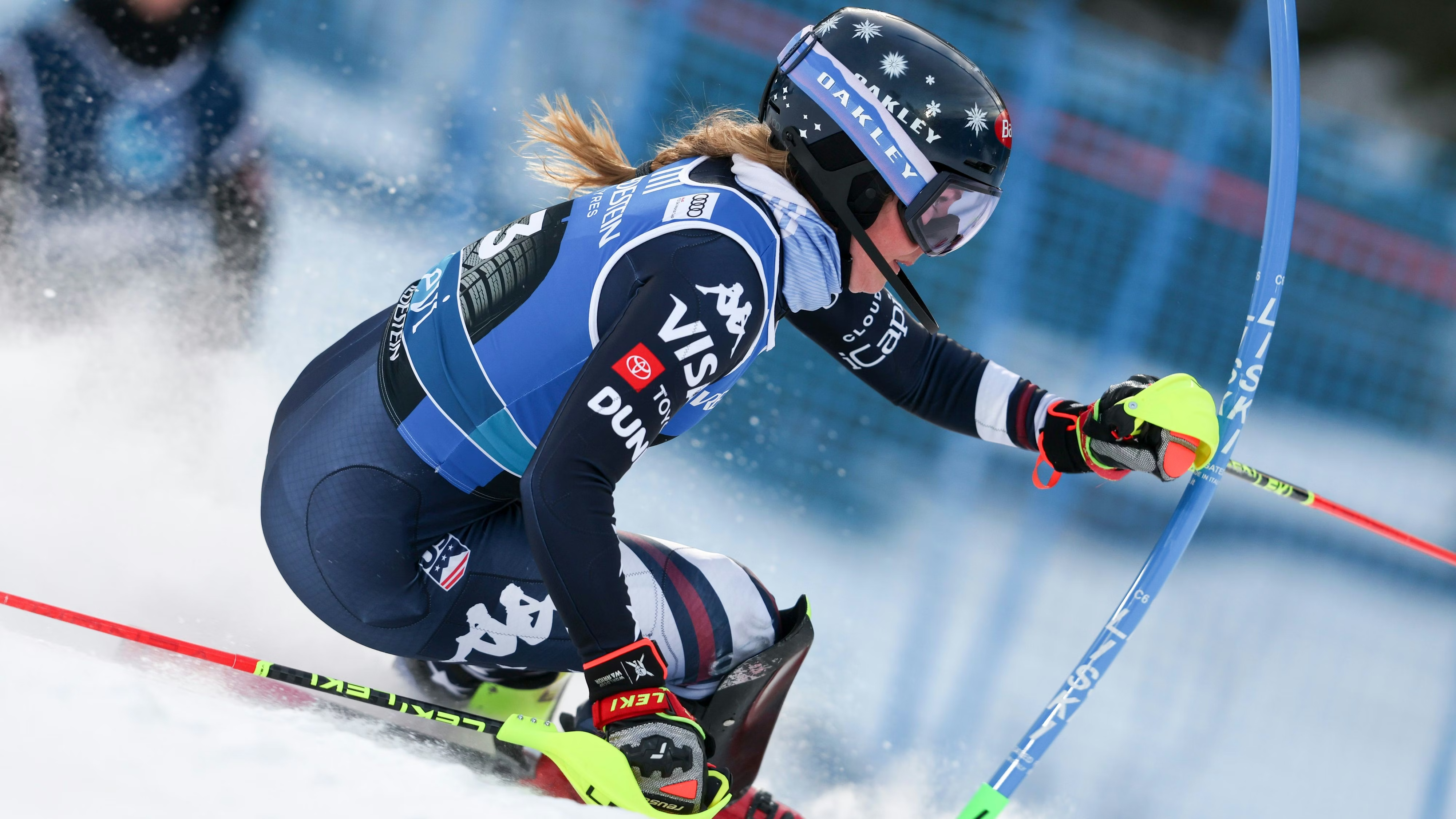
Mikaela Shiffrin's return to the Olympic stage brought more disappointment Tuesday when she posted her worst slalom result in nearly 14 years, dropping her and partner Breezy Johnson to fourth in the team combined event. The 30-year-old Colorado native, who entered as heavy favorite with 71 career World Cup slalom wins and reigning world champion status, clocked the 15th-fastest slalom time at 45.38 seconds. Austria's Ariane Raedler and Katharina Huber claimed gold, Germany's Emma Aicher and Kira Weidle-Winkelmann took silver, and Americans Jackie Wiles and Paula Moltzan won bronze in the event's Olympic debut.
Shiffrin's performance extends her Olympic medal drought to seven consecutive races dating to Beijing 2022, where she competed in six events without a single podium. She told reporters she "didn't get my comfort level" and acknowledged needing to adjust before her remaining two chances: giant slalom February 15 (11th place) and slalom February 18.
Ski mountaineering, or skimo, is making its Olympic debut at the Milan Cortina Winter Games this week as the first new sport added to the Winter Olympics since 2002, with deep Colorado roots and Crested Butte's Cam Smith representing the United States. Colorado played a pivotal role in bringing competitive ski mountaineering to America 20 years ago when Breckenridge's Pete Swenson saw the revolutionary skimo gear at the 2006 world championships in Italy and immediately thought "we've got to do this in the U.S., specifically in Colorado." Swenson launched the Colorado Ski Mountaineering Cup race series in 2007 with about 14 competitors in the first event.
The sport evolved from the 40-mile Grand Traverse from Crested Butte to Aspen over Star Pass (6,800 feet of climbing), which began in the late 1990s as a telemark race before teams switched to lighter skimo gear that allowed locked heels for descents.
Smith and Anna Gibson of Wyoming will compete in two Olympic events: a sprint on February 19 with three-to-four-minute heats involving an ascent and descent, and a mixed relay on February 21 where each athlete does two laps lasting about 30 minutes total.
Environment
💧 Colorado River States Miss Second Deadline + Wolverines
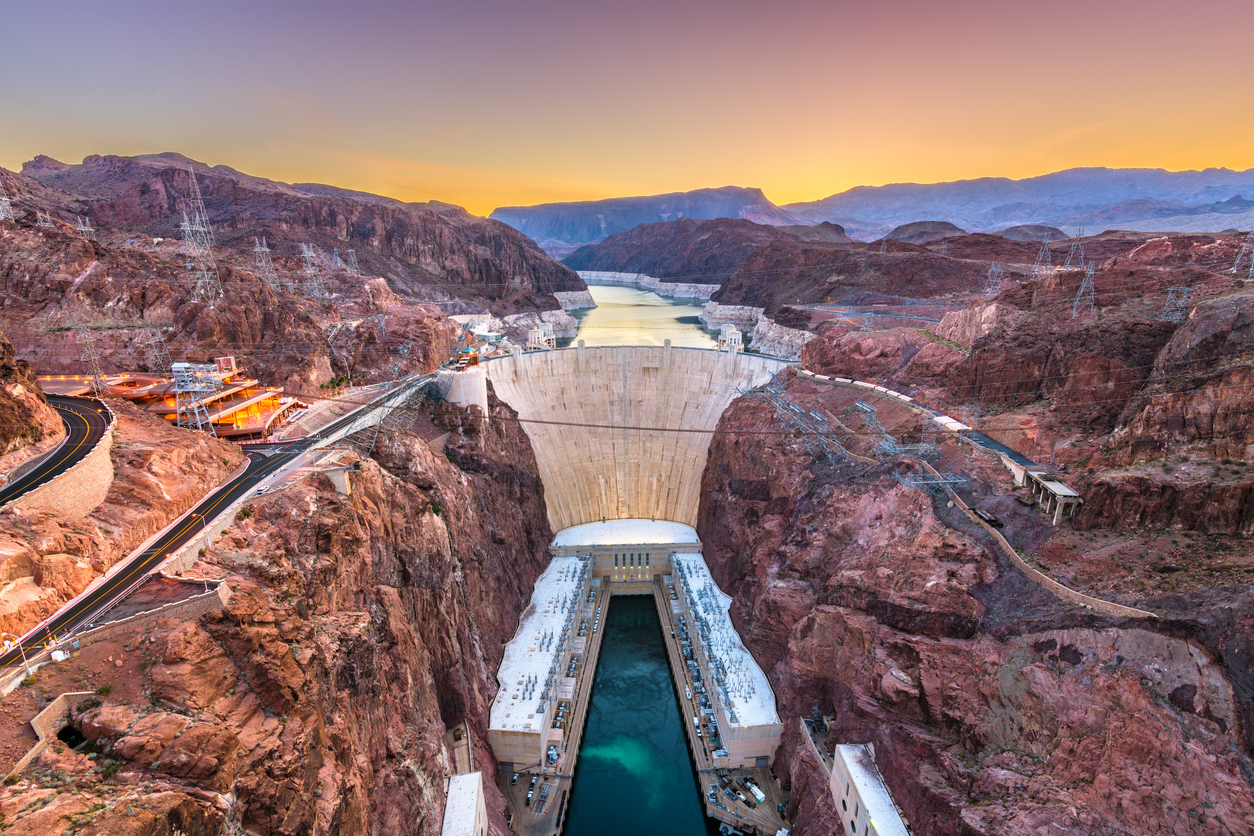
Seven Colorado River states missed the Bureau of Reclamation's February 14 deadline to agree on managing the river and its reservoirs, the second failed deadline in over two years of contentious negotiations about Lake Powell and Lake Mead operations starting in 2026. Interior Secretary Doug Burgum announced the Department of the Interior will finalize its own management plan by October after states couldn't bridge the divide between Upper Basin (Colorado, Utah, Wyoming, New Mexico) and Lower Basin (Arizona, California, Nevada).
The impasse centers on mandatory water cuts: Lower Basin states offered reductions of 27% (Arizona), 10% (California), and 17% (Nevada), while Upper Basin states refuse permanent mandatory restrictions. Colorado's chief negotiator Becky Mitchell argued "we're being asked to solve a problem we didn't create with water we don't have," while Nevada's John Entsminger described talks as "extremely frustrating" and Arizona's Tom Buschatzke said his Lower Basin partners made "numerous good-faith compromises" that Upper Basin rejected. Meanwhile, drought conditions intensified with historically low snowpack across the West, and Bureau of Reclamation projections show Lake Powell could fall too low for hydropower generation as early as July 2026.
Why It Matters: The collapse of negotiations exposes fundamental disagreements about who bears responsibility for a shrinking river. Lower Basin states argue they've made concrete offers (Arizona's proposed 27% cut would devastate agriculture and cities) while Upper Basin states have offered nothing. But Upper Basin states counter they can't guarantee water they don't have; Mitchell's comment that they're being asked "to solve a problem we didn't create with water we don't have" reflects frustration that snowpack collapsed due to climate change, not overuse.
The Lake Powell forecasts are genuinely alarming: hydropower shutdown could happen this summer, meaning not just electricity loss for millions but potential inability to move water downstream through Glen Canyon Dam. Federal intervention by October will almost certainly spark lawsuits. Arizona Republican congressmen already wrote Interior asking to withdraw federal plans, calling them disproportionate to Arizona. Senator Hickenlooper's warning that "litigation won't solve the problem of this long-term aridification" seems prophetic, but states appear unable to avoid it. The Upper Colorado River Commission's statement that "water users across the Upper Basin are preparing for deep cuts to their water supplies" shows both sides facing severe pain.
Colorado Parks and Wildlife released a 106-page wolverine restoration plan in January 2026 outlining how the state will reintroduce the predator not seen in Colorado since 1919, marking a dramatic shift from the controversial wolf reintroduction that has divided the state. CPW species coordinator Bob Inman emphasized wolverines are "very different" from wolves, noting they're "not socially divisive" and most people find them "pretty cool."
The plan calls for releasing 15 wolverines per year over three years (45 total) into three Western Slope zones: the Sawatch Range and Elk Mountains in year one, the West Elk and La Garita/La Plata Mountains in year two, and the San Juan Mountains in year three. Unlike the voter-mandated wolf reintroduction passed via Proposition 114, wolverines received overwhelming bipartisan legislative support in 2024 when Senate Bill 171 passed.
What else is going on
- Dillon Lake Loops winter trail closed for the 2026 season. The popular multi-use track on Dillon Reservoir won't be maintained this year due to one of the latest reservoir freezes in recorded history, with conditions never reaching the consistency needed to safely prepare the ice trails.
- Yosemite braces for up to 7 feet of snow in major Sierra storm. The National Weather Service placed the region under a winter storm watch with elevations above 6,000 feet expected to see 3 to 5 feet of snow, while the highest peaks could receive 5 to 7 feet with 60 mph wind gusts creating dangerous whiteout conditions.
- Gray wolf tracked in Los Angeles County for first time in 100 years. A 3-year-old female wolf traveled over 370 miles from Plumas County to reach the mountains north of Santa Clarita, marking the furthest south a gray wolf has been documented in California since reintroduction efforts began 30 years ago.
📚 Trailhead Trivia
Which Olympic events reach some of the fastest speeds?
⚡ Share The Stoke
This newsletter is for mountain lovers, first chair advocates, and the ones who live for type 2 fun. Basically, the type of people whose "five-year plan" is just a list of peaks and routes!
If you know someone like that, forward this email or send them to thestokereport.com. Thanks for spreading the stoke — it seriously means a lot!
Answer!
Luge is generally recognized as the fastest sport at the Winter Olympics, with athletes reaching speeds exceeding 87-93 MPH. Downhill Skiing is a very close runner up with speeds of 80-90 MPH
See you soon,
Tyler
Creator — The Stoke Report
