

Good morning, Stoke Crew. Keeping it simple today. Go outside this week, even if it’s just a walk around the block :) Your brain will thank you! Here’s the report!
Stay STOKED - Tyler
In today's report
- 🎿 Chile will ski into November
- ❄️ 83% shot at a historic El Niño
- 🥇 Goomes goes 3-for-3 at Rampage
- 🚴 Arizona Trail race - update
- 💧 A record low at Lake Powell
- 🏔️ This weeks quick hits
Skiing
❄️ Snow down south, snow back home
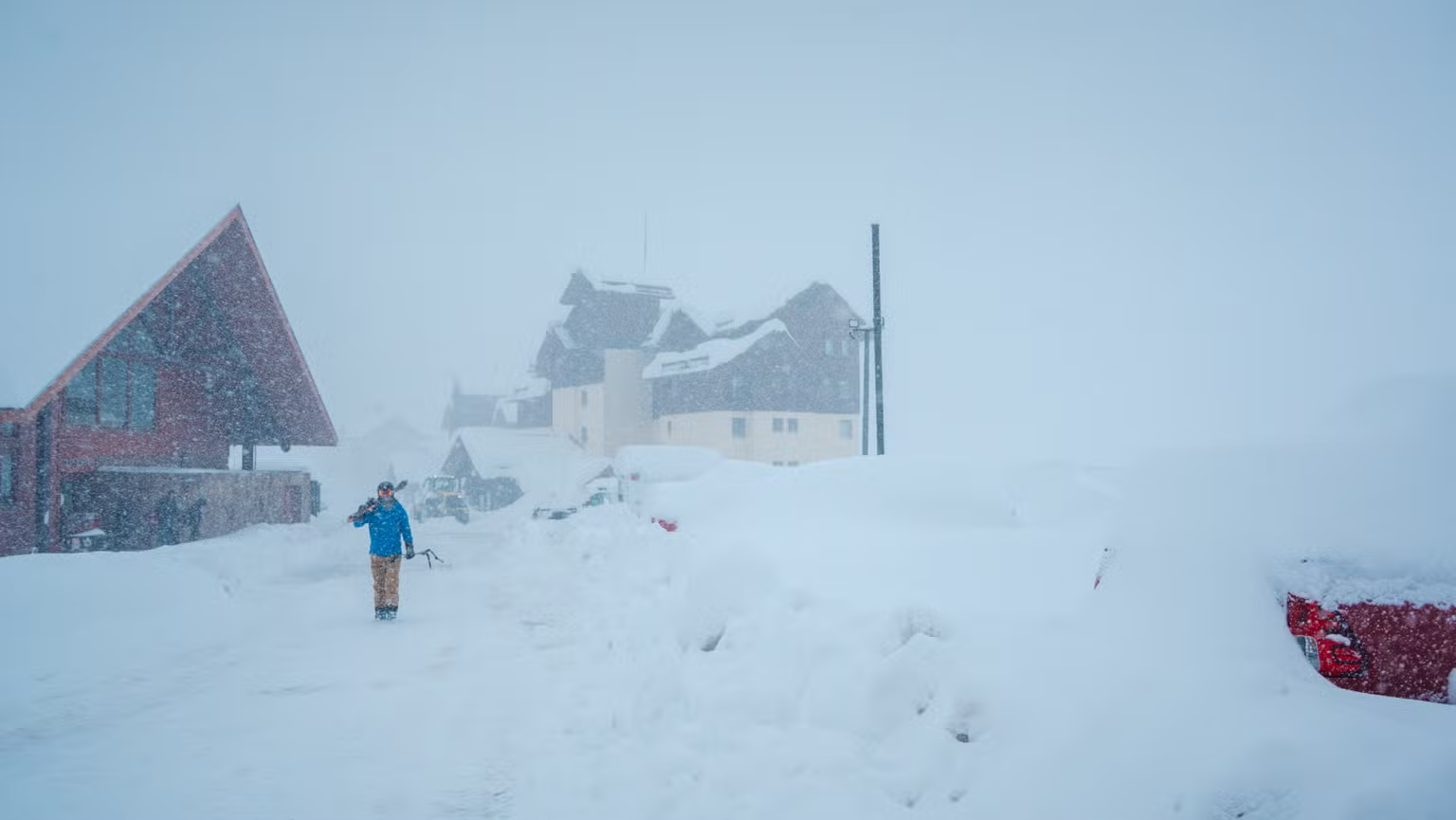
🎿 Valle Nevado plans to ski into November, something it has never done in 38 years of spinning lifts. The Chilean resort's new last day is Sunday, Nov. 8, three weeks past the Oct. 18 finish it had been planning. Last week's storm sealed it with about 42 inches in 48 hours.
Seasons are flipped down there. The core South American season usually runs from early July to mid-September, which makes November spring. The prized aspect is south-facing, the mirror image of the north-facing shots we hunt for up here.
- The snowpack was already stacked. Valle Nevado had logged more than 270 inches by early October, well above the roughly 230 inches it averages in a year.
- South-facing terrain and an elevation of 9,925 feet help it hang onto snow this late.
- That stretches the season to 143 days.
Why It Matters: Before this extension, the resort was projecting more than 310,000 visits for the season. Three bonus weeks give it a real shot at beating that. In a business where one bad winter can wreck a year, a record one is money in the bank!
❄️ NOAA's odds on a record-strength El Niño went up this month. Its Oct. 8 update gives this event an 83% chance of beating every El Niño since 1950 over October through December. The September update said 75%.
- NOAA's official outlook says it keeps growing until the calendar flips to 2027. One NOAA model sees the peak coming sooner, but says the U.S. effects can keep ramping up after the ocean tops out.
- March is the one sure thing. In every single one of the 10 El Niño winters since 1982, Colorado and Utah got a snowier-than-normal March. Those Marches averaged around 136% of normal.
- The full season is a coin flip, with only half finishing above average on snowpack. OpenSnow's Joel Gratz says "the signal is there for a pretty active late season."
Why It Matters: The West is coming off a near-record-bad snowpack, so everybody wants this El Niño to be the fix. NOAA's own wording says a bigger event makes the usual impacts more likely, not guaranteed. Plan for a coin flip and celebrate if it breaks our way.
🌨️ Colorado's high country is in for snow midweek, but the forecasts were all over the map as of Monday. Meteorologist Chris Tomer called for 1 to 2 feet in the San Juans. The NWS office in Pueblo had a few inches Tuesday up high, plus 3-6 more by the end of Wednesday night from the San Juans to the central mountains. Boulder's office gave its higher peaks and passes 70% odds of 6-10 inches. The main push was due Wednesday into Thursday morning.
Biking
🏜️ Desert biking winners
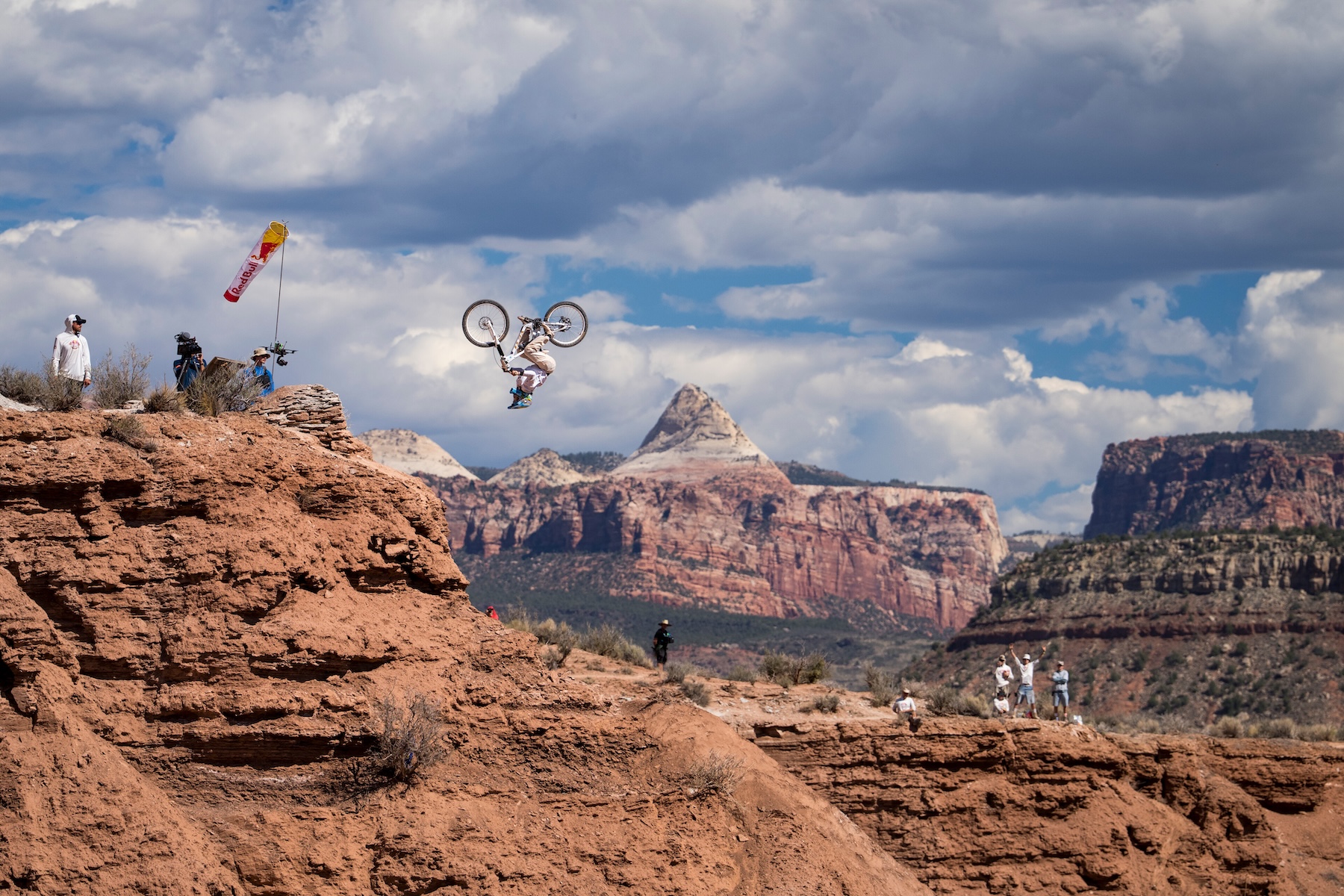
🥇 Robin Goomes is 3-for-3 at Rampage. No rider of either gender had won three straight before her. The Kiwi took this one on Thursday, Oct. 8, outside Virgin, Utah. The men never got a fair shot at their final. Wind shut things down Saturday with eight riders still waiting up top.
Quick beta. Rampage is best of two runs. If even one rider misses out on a first run, there's no winner.
- Hannah Bergemann set the bar early with a 91.25. Goomes sat 0.63 back after an opener with some sloppy landings.
- Her second run was cleaner and scored 93.50. It included a flat spin 360, which no woman had landed at Rampage before, and it earned her Best Trick.
- Bergemann dropped last and put down a 92.75, leaving her runner-up again, 0.75 short. Third went to Canada's Kirsten Van Horne, who kept the 86.50 from her first run and skipped a second.
- Saturday, nine of the 17 men had dropped when wind gusts topped 20 mph at the top. Szymon Godziek led with a 90.00. After almost two hours on weather hold, organizers called it early that afternoon.
- There's no makeup date. Sunday brought more wind and rain, and Rampage founder Todd Barber says a week's delay wasn't realistic for an event this big and this expensive.
Why It Matters: The women's division only started in 2024, and Goomes has won every edition of it. She now holds a streak no man at Rampage ever pulled off. Every guy in that field spent about a week shaping a line with a small crew and hand tools. It’s a shame they couldn’t make their run after all that hard work. But rider safety comes first.
🚴 Alex Schultz owns the AZT800. The Tucson rider won the Arizona Trail Race long route for the third time, rolling into Flagstaff on the night of Friday, Oct. 9. His time was 8 days, 14 hours, and 16 minutes for 853 miles.
- That pencils out to an average of roughly 99 miles a day for more than eight days.
- Last year he won in 9 days, 10 hours, and 29 minutes on a route of roughly 830 miles. This time he was about 20 hours faster on a longer course.
- Don't call it a record, though. The route shifts every year with closures and new trail, so the race stopped recognizing FKTs.
- Mechanically he got off easy, with just some broken spokes and a cranky dropper post. The cold was harder. He rode without a sleeping bag, and after a few frigid nights he says he's packing one next time.
Why It Matters: Timing is everything in a self-supported race. Schultz was done Friday night, while the back of the field rode straight into cold rain and mud. Being fast doesn't just win you the race, it can spare you the worst of it.
Environment
🚰 Water on the line
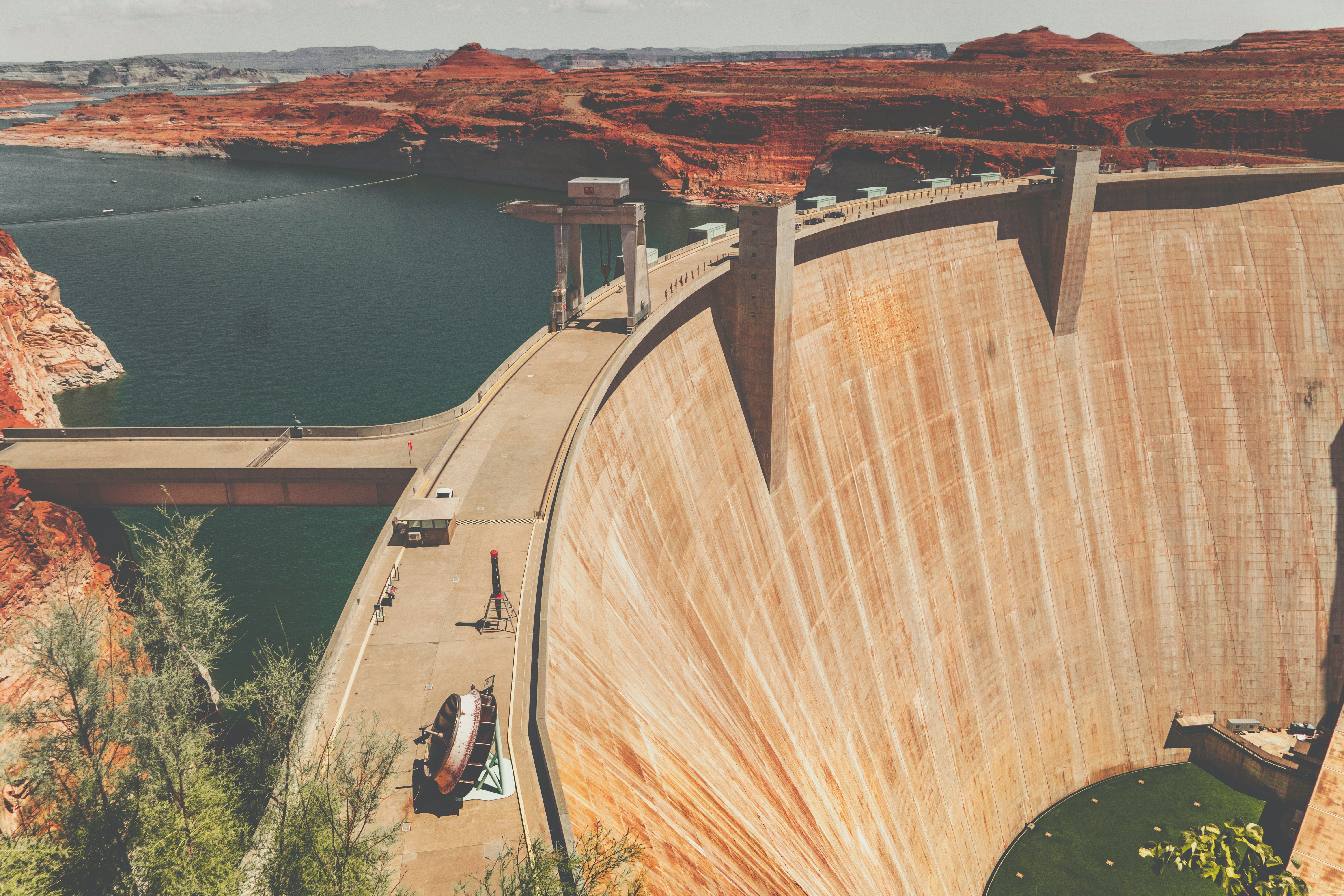
💧 Lake Powell got scary close to the federal red line in September. It bottomed at a record low of 3,516.62 feet on Sept. 15, about 6.6 feet above the 3,510 mark the feds are working to protect. A wet end to the month bought back about 2 feet.
Two numbers matter here. At 3,490 feet, Glen Canyon Dam hits minimum power pool, the point where its hydro turbines stop working well. The new two-year federal plan tries to hold Powell above 3,510 feet, which keeps a 20-foot cushion over that.
- The 2026 water year (October 2025 through September 2026) knocked about 27 feet off the lake. Statewide, it was the hottest water year Colorado has seen in 131 years of record-keeping.
- Snow drought did the damage. Take out the extra water released from upstream dams and Powell's inflow was 3.72 million acre-feet, just 39% of normal. April through July, the heart of runoff season, managed 18%.
- Counting everything that actually flowed in, the year totaled 4.46 million acre-feet. Only 2002 and 2021 were worse.
- Glen Canyon Dam let out 6 million acre-feet. That's the smallest release year since the dam was brand new in the 1960s, and the original plan was 7.48 million. Grand Canyon flows drop and Lake Mead gets less, too.
- Reclamation's mid-September forecast came before the late-month storms. Its most likely path had Powell bottoming at 3,511.43 feet at the end of February. Its dry scenario had the lake under minimum power pool by the end of September 2027.
Why It Matters: The feds got Powell through 2026 by slashing releases and leaning on Flaming Gorge, which is slated to send a full million acre-feet by April. Blue Mesa, Colorado's biggest reservoir, had no water to spare. That’s why we need this El Niño to deliver. Snowpack feeds the West’s watersheds, and our reservoirs need a big season to recover.
Mountain Briefing
🏔️ Quick hits
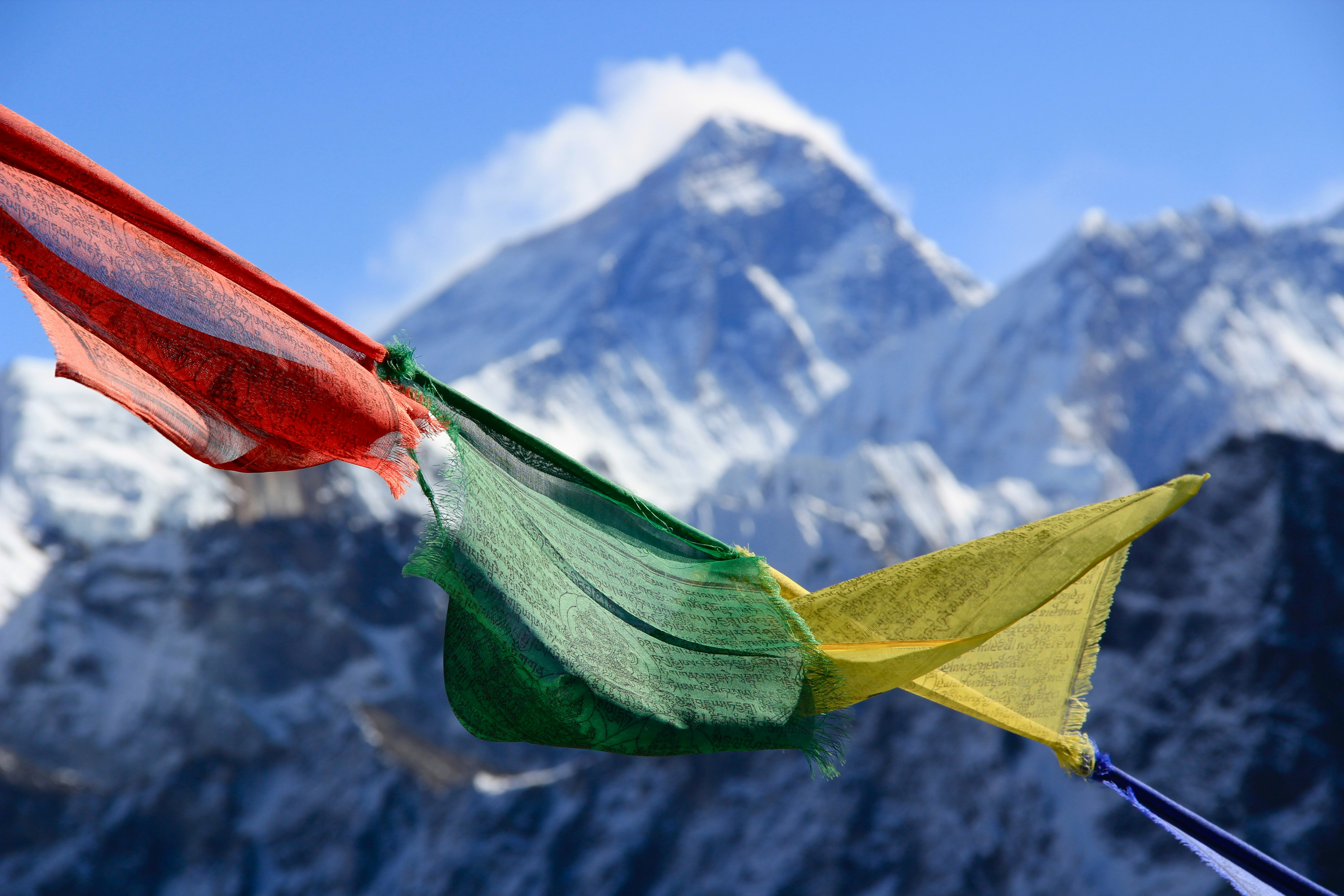
❄️ Four Russian climbers are trying to summit Everest on the off season. That means no fixed lines or ladders in the Khumbu Icefall, and no other team on the mountain. Deep snow stopped their first rotation at 18,500 FT, then pushed them back out of the icefall on Oct. 10. Their next move was a route up toward the Lho La pass, set for Oct. 11. No result had posted by Oct. 12.
🚠 Snowmass's old Elk Camp quad lift is headed for the Grand Mesa. Powderhorn retired its 1972 West End double this spring, and the rebuilt quad goes in under a new name, the Wild West Express. Expect about six minutes to the top, down from 13-plus. Powderhorn is targeting December to open it, right around the resort's 60th birthday. The towers are up but the rope and chairs are not. Going secondhand saves more than $3 million.
🎿 Monarch has a new deal for Salida kids. About 1,300 students in the Salida School District get a comped ski or ride day this winter. It's the first edition of a program called Salida School Days. Monarch has not said whether lessons or rental gear are included, and dates were still to come. The independent hill has been spinning lifts since 1939, and town is only about 20 miles down the road. Monarch's also got a new $49 half-day beginner lesson this season.
🏆 Americans hold 13 spots on the 53-rider 2027 Freeride World Tour field. Five of the 11 rookies are from the U.S., and three riders overall have Colorado roots. Edwards local Joey Leonardo and Silt's Shayne Blue Sandblom are back for year two after both went second at Val Thorens. Steamboat's Johnny Duty is a snowboard rookie. Mia Jones returns as the reigning snowboard women's champ, and Toby Rafford and Ross Tester went 2-3 in ski men last season.
📚 Trailhead Trivia
Off-season Everest is rare. Winter Everest is rarer. Which country's climbers made the first winter ascent, and what year?
⚡ Share The Stoke
THE STOKE REPORT is a quick, no-fluff newsletter built for mountain lovers, adventure seekers, and those who enjoy a little Type 2 fun!
If you know someone like that, forward this email or send them to thestokereport.com. Thanks for spreading THE STOKE — it seriously means a lot!
If you ever have ideas, tips, or stories worth sharing, reply to this email. I'd love to hear from you.
Answer!
Poland, in 1980. Leszek Cichy and Krzysztof Wielicki topped out on February 17, 1980, the last day their permit allowed. It was the first time anyone had climbed an 8,000-meter peak in winter. Their oxygen ran out at the South Summit, and the team was so short on gear that some of them used welding goggles
See you soon,
Tyler
Founder / Editor — THE STOKE REPORT
